The Grifters
Directed by Stephen Frears

Grift’s like anything else, Roy. You don’t stand still. You either go up or down. Usually down, sooner or later.
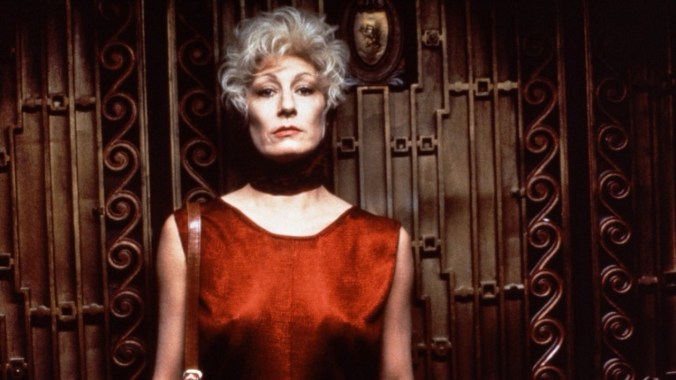
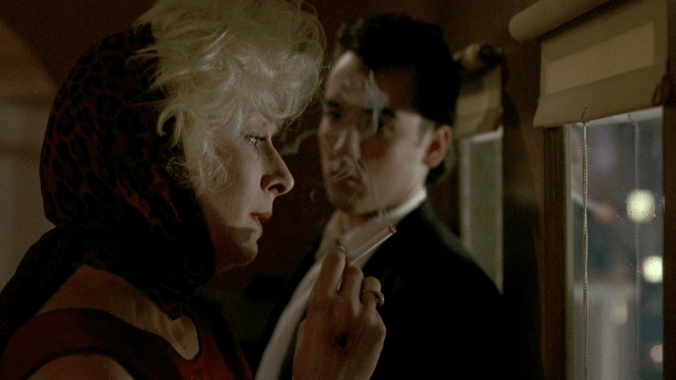
Lily in The Grifters
Movies about con artists can be tricky. Directors often have a difficult time straddling the line between a believable reality and pulling a con on the audience. The Sting is a great example of a con artist movie that simultaneously invites the audience in, then pulls a trick on them. It’s exciting for the audience to be taken on the con because everything is all right at the end–they’ve been able to identify with the hero (or anti-hero, as many protagonists in con artist films are not exactly savory characters), are excited to share in the feeling of “winning” the con with the characters, and even when there has been a twist or trick played on the audience, they feel invigorated by having gone on the ride. With these types of con artist films, everyone feels good in the end.
The Grifters is not that kind of con artist film. It takes a harder look at its characters and shows what life must really be like for people who maintain their livelihood by cheating others. Though many elements of The Grifters are melodramatic and overblown (it’s based on a 1963 crime novel my Jim Thompson), there is a gritty reality that lurks underneath its surface. Stephen Frears excels at taking sometimes outlandish seeming plots and finding the reality of their situations. In the case of The Grifters, the outstanding cast helps to anchor all the elements and give them a gravity and weight that wouldn’t have been present with a lesser director or cast. The result is a dark and satisfying film, a popcorn movie with a bit of heft, perfect if you want something inconsequential but not total fluff.
SPOILERS BELOW! I’m not going to con you out of a fantastic viewing experience if you haven’t seen it yet. Go watch it now, then come back!
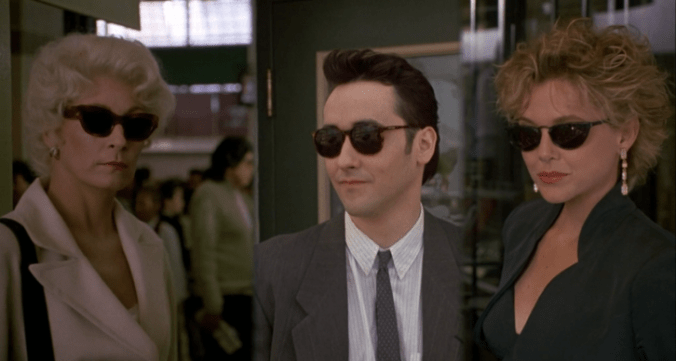
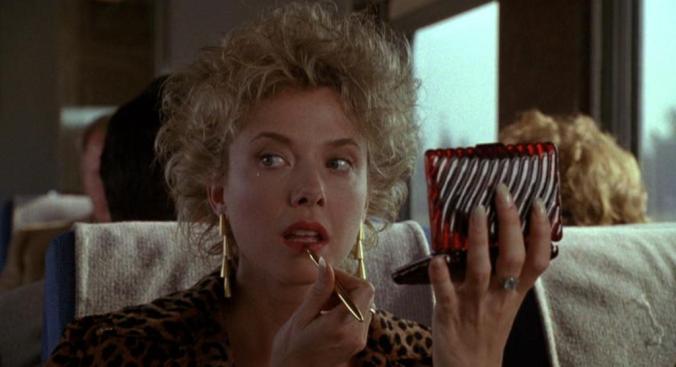
The Grifters follows three con artists and how they relate to each other. Roy (John Cusak) is a small time grifter in Los Angeles. He runs simple grifts in bars around town, like tricking bartenders into giving him change for twenties when he’s actually handing them tens. He’s involved with Myra (pronounced “Moy-rah”, played by Annette Bening), another con artist who uses her sexuality as much as she uses her brain. Lily (Anjelica Huston) is the veteran con artist. She’s employed by the mob to run up the bets on long shot horses to lower the odds. She also makes a few side bets here and there using the mob money, picking up discarded gambling slips from around the track when the races are done and filing them amongst some of her actual betting slips so the mob doesn’t realize how much she is skimming. When the mob sends Lily to the La Jolla races, she decides to stop by Los Angeles to visit Roy. What follows is the complex unravelling of relationships between the three characters. How well does Roy really know Myra? What’s Lily’s real relationship to Roy? What does Myra really want from Roy? We follow the three characters as they work their individual grifts, each operating on a different level and using their respective talents to try to manipulate one another. Every scene is packed full with subtext.
Michael: I don’t know how much rewatch value it has for me. I would watch it again, but it’s not something I’m champing at the bit to see. But in all aspects, it was a really great film.
Jordan: I would want to watch it again because this time watching it through…
Michael: I talked a lot.
Jordan: …well, that too, but it was one of those movies I liked because I couldn’t trust anything that was happening. But I didn’t feel like the filmmakers were like, “Fuck you, audience!”, it felt like it was exciting that I couldn’t trust anyone, more like, “Watch what they’re going to do now!”
Michael: It wasn’t because the filmmakers didn’t want the audience to not trust anyone, it’s because the filmmakers wanted the characters to not trust anyone. So as an audience member you’re sitting there thinking, “Oh, I don’t know what the fuck is gonna happen because the characters don’t know what’s gonna happen and can’t trust anyone.”
Jordan: And they’re all lying, too. So as an audience member you’re trying to figure out what their actual character traits are. I loved all the moments that Annette Bening used her real voice. Because I know, from seeing her in other movies, that is her real voice. But that’s not the voice the character was saying was her real voice. So which is the put on voice for the character of Myra? Is the high girlish voice the put-on voice, because it’s not Annette Bening’s real voice? Or is it the character’s real voice and the lower register is the false one? Because the only time we heard Bening’s natural voice was when the character was directly manipulating people. I loved that! That kind of thing was fun to watch.
The Grifters is clearly a neo-noir, so it has a lot of classic noir elements. Noir films rose in popularity in the 1940s and 1950s and are characterized by a very specific style. There’s high contrast in the composition of the shots, lots of chiaroscuro lighting. The stories involve crime elements. Classic noir films are Double Indemnity, Out of the Past, Detour, The Big Sleep, and (one of my personal favorites) Gilda. The character of a femme fatale emerged from noir films, where a woman could be hard and cruel and lead to a man’s downfall. The male heroes in noir are often depicted as heavily flawed. Though they may have a macho attitude and use their fists to solve problems, they also are emotionally crippled in some way, and are often physically beaten as well at some point in the film.
Neo-noir is a type of film sub-genre that emerged in the 1970s when directors were inspired by the techniques and plots of classic noir films and decided to update them to modern day. Neo-noir takes the classic femme fatale and flawed man archetypes and attempts to add some depth and dimension to the characters. The settings are never glamorous, always having an element of grime and a rough edge to them. There can be a documentary style to the camerawork. The Grifters employs all these elements.
Michael: It was neo-noir in that way where there were hot minutes where I questioned whether it was set in the time it was filmed.
All the hairstyles, clothing, and cars have the influence of the 40s, which works well for a film released in 1990. The 1980s had so much 40s influence in the clothing styles anyway, it allowed the film’s stylistic choices to seem modern while still being referential.
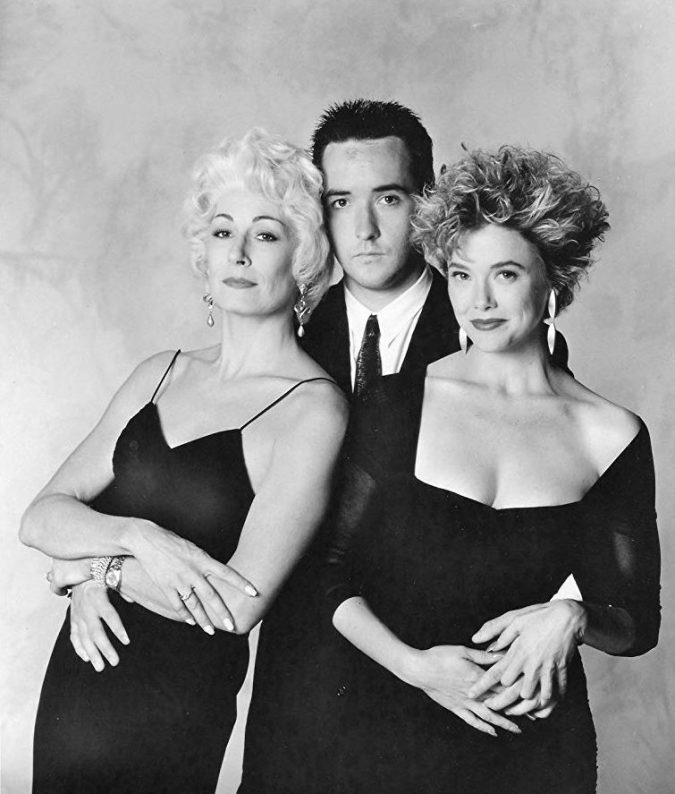
The dialogue is also very stylized. The scene where Roy and Lily have their first onscreen conversation threw both of us off because they just kept saying each other’s names in every sentence.
Michael: No one in real life says someone’s name that much. You say their name to get their attention, and that’s it.
Jordan: They seemed very intent on using their first names with each other. I started wondering if they were trying to keep distance between each other by saying each other’s names constantly. Because when it got to Roy and Myra’s scenes, they didn’t use each other’s names often at all. And Lily didn’t use anyone else’s first name in the same way she used Roy’s. So it seemed to be very purposeful for those two characters. I appreciated they were able to deliver those lines naturally, even though the construction of those sentences was very awkward.
This dialogue sets up tension between the two characters, and the repetition of their names to each other drives the tension home. It creates a kind of discomfort for the audience, even if they aren’t aware that the discomfort is being caused by the unnatural sounding dialogue.
Jordan: I thought the performances were all very good.
Michael: Oh, yeah, they were stellar. The neat thing about this movie is that literally every character was the star of their own film, and we were just watching Roy. Even the guy at the front desk of Roy’s apartment building was in his own movie the entire time, and he was the star of it. The world was so heavily populated with real people.
Jordan: And that’s a Frears specialty. I’ve always found that he doesn’t have a very strong visual style outside of just being point and shoot, but he’s point and shooting “real” life. It has a bit of a cinéma vérité feel to it, which fits with the neo-noir style of film making. Frears populates his movies with this type of realism anyway, without giving it a lot of visual style, so it’s a good fit all around. That being said, there were a few very specific stylistic camera movies. The shot were Myra is getting ice and then going to Lily’s room at the roadside hotel was great. I liked that tracking shot. And I liked the overhead shot following her into the room. But there’s not a lot of noticeable “fancy” camerawork.
Michael: There is one thing I want to say about this movie.
Jordan: What?
Michael: How old was Anjelica Huston in 1990?
Siri: Anjelica Huston was 39 years old.
Michael: I guess that gels. …She looked horrible for her age!
Jordan: It was the blonde hair. I feel like her coloring always works best with black hair. Blonde hair on her washes her out.
Michael: Because I was watching this like, “No, she is not 14 years older than this 25 year old…”
Jordan: I thought she looked the right age, but the character was so stressed, which I think the make-up job was purposefully done to make her look that way. So much of her was so bleached out. She didn’t have much color at all, and I felt it gave her an on-edge look. Because she can put on the sunglasses and look cool and calm and collected, she takes off the glasses and does a few scenes, and she looks completely different.
Michael: How old was Annette Bening in 1990?
Siri: Annette Bening was 32 years old.
Michael: She also looked horrible for her age.
Jordan: I thought she looked great!
Michael: These bitches be lookin’ rough!
Jordan: I was like, “Wow!” She looked great, especially since she was naked half the time!
Michael: She did look great, but I also thought she wasn’t so drastically different in age from Lily that they could have that catfight about how old Lily was.
Jordan: I kind of liked that, though.
Michael: But I guess that’s how people really are. People “about to be old” love to tell other people how old they are. They’re like, “I’m fittin’ to be old myself, but there’s someone a little bit older than me, so I can be young around them!”
Jordan: I like that they kept basically their actual ages for this movie and made it all work very well.
Michael: Yeah, it did all work very well.
Jordan: And I liked that Myra was used to playing the dumb, loose, trampy girl, and she’s about to be too old to play it anymore. I felt there was a lot of that happening in the movie.
Michael: They make it clear in the film that for both of these women there’s a timeline. There’s an expiration date stamped on both of them.
Jordan: And they both seem aware of it, so that was motivating a lot of their actions.
Michael: And they both saw Roy as their ticket to the next step.
Jordan: Maybe because he seemed easy to manipulate.
Michael: And Roy’s the kind of person, given the upbringing that he had, who would be very easily manipulated. Because he had manipulator parents.
Jordan: And he was trying to learn how to not be manipulated. He wanted to learn how to grift…
Michael: He needed to learn the tricks so he could not be manipulated.
Jordan: And he sought out that father figure who was just another grifter, but it was someone who was going to teach him how to grift. And it didn’t work. Because even when he’s like, “I know you’re trying to trick me,” to Lily and Myra, he wasn’t smart enough to stop them from tricking him. Until they got really desperate and blatant about it. It’s such a trademark noir thing to have your main male character be weak while still having to be strong. So we get this guy who’s trying to be tough, but he’s still getting beat up, and he’s scared, and he doesn’t know what’s going on.
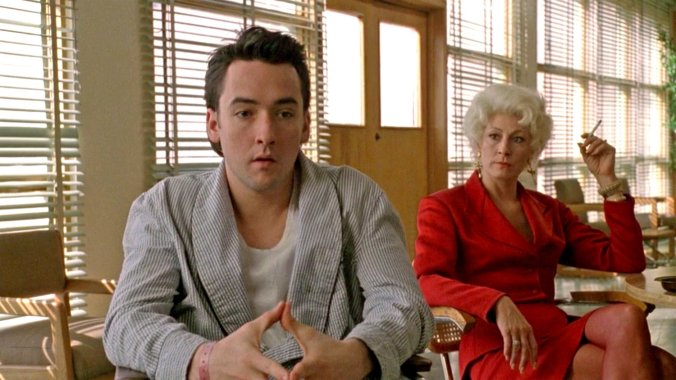
Michael: Well, it’s funny because even though he was sort of the main focus of the film, he wasn’t doing much. He was just kind of there. We didn’t even see him grifting much, it was really about these two women pulling him. It was “let’s watch a rag doll being fought over by two little girls”.
Jordan: And the rag doll wants to get away but doesn’t want to get away from it. You could see through the whole movie how uncomfortable he was and how much he was saying, “No, I have to get out of this”, but he didn’t leave. Nothing was happening that was so horrible he actually removed himself from the situation or stopped grifting.
The plot of The Grifters is anything but straightforward. The story twists and turns. So much of it is about peeling back the layers of the characters, watching their interactions with each other, listening to the stories they tell one another, watching their behaviors when they are alone. The audience gets to piece everything together and figure out what’s “real” and what’s a “con”.
What I found most interesting was figuring out what exactly it was that the characters were trying to get away with. Myra and Lily were able to shift and change so easily depending on what situation they found themselves currently involved in. Roy had a more difficult time adapting to shifting ground.
There’s a scene where the mob finds out that Lily missed a big race in La Jolla and thinks she’s stealing their money by not making the bets they hired her to make. She’s trying to protest her innocence of this crime because she was visiting Roy in the hospital while trying to hide the long con she’s been pulling on them. Bobo, the mob boss (played extraordinarily well by Pat Hingle), tortures her to get the truth from her. Huston performs the scene perfectly (which may have gone a long way towards why she was nominated for an Oscar for the role). The scene also reveals a level of vulnerability to her character that up to this point hadn’t been shown in the film.
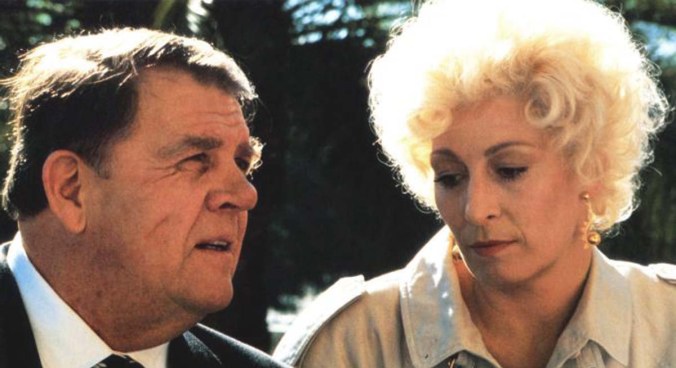
Myra was a particularly interesting character because it seemed like she should be a super successful con artist, but then she wasn’t…but then she was….
Michael: Everybody in the film clocks her!
Jordan: They might clock her, but they still go along with her. Which makes her a good con artist, just not at the con she intends to pull off.
Michael: She’s getting her needs met. Was it her con, or was it people taking advantage of her and her not caring?
Jordan: She always seemed to have more control over the situation, but it also seemed to be she had her sexuality in her back pocket if she had to use it.
Michael: It was in her front pocket! It was always her jumping off point. But I did love that scene where the landlord is wanting rent but she’s lying there naked saying, “The money’s right there. But you can’t have both.” Just sitting there, pussy out. “Which are you gonna choose?” Cause it wasn’t like she didn’t have the money to pay the rent so she had to fuck this guy. At first I thought she didn’t have the money.
Jordan: That’s what I thought, too.
Michael: But then we find out it was, “I’m going to fuck this guy and keep the rent.”
Jordan: And she starts with trying to blackmail him. When he’s like, “You’re not going to blackmail me. Get the rent.” She’s like, “Okay, let me take all my clothes off.”
Michael: They all got her game and went along with it anyway, but they were also getting something out of it.
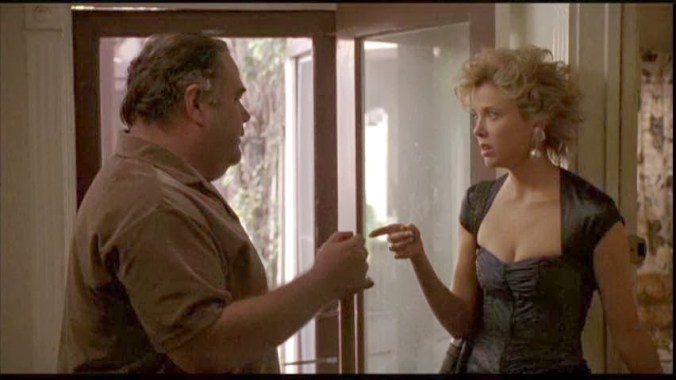
Now we’re going to get to the heavy hitting spoilers, so if you want to really have the fun of watching the movie without knowing what happens, now’s the time to go do that…
Michael: The incest angle seemed so…odd. Which I guess it is, and is supposed to be. But I was like, “What is this adding to this film right now?” I mean, I guess it added a lot. It started off this weird, off-handed thing Roy’s girlfriend, Myra, is saying to try to get at him…but then it was real? And then Lily at the end when she’s trying to take all of Roy’s cash was like, “Okay, fuck it, let’s fuck, I need the money!” I don’t know if you could feel me, but I was sinking back against the couch like, “What is this? What’s happening right now? I don’t like this, what is this?”
Jordan: I thought that moment was very well done, because it somehow felt natural for the characters to be in that situation in that moment. Which made it even more disturbing because you’re sitting there thinking, “Of course this is where this went. …Ew! Why do I think ‘of course’?!”
Michael: Because there wasn’t that big of an age difference, and she didn’t seem to really raise him.
Jordan: But there is that element of she raised him enough. He was heavily impacted by her absence in his life, but he knew her well enough to know when she was gone. He knew her well enough to want to grift. He knew that was an element of her life, and he wanted to be a part of that.
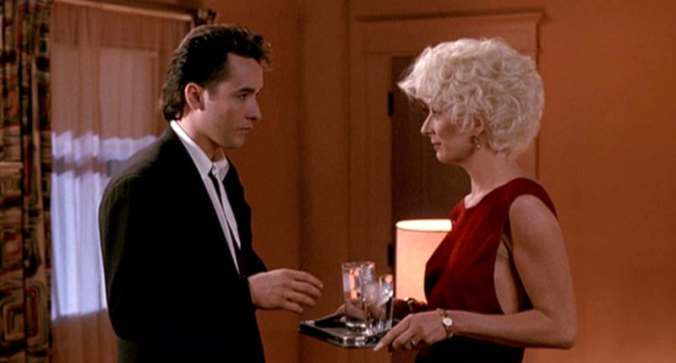
Jordan: One of the things that made the build up to the incest easier to swallow was because we couldn’t trust the characters. Like when the landlord calls Roy up from the front desk of his apartment building and tells him, “This woman is here to see you. She says she’s your mother.” You know the landlord doesn’t believe that’s Roy’s mother. So do I as an audience member believe she’s his mother?
Michael: Is that the cover?
Jordan: Right. Did they pull a con once and she posed as his mother and then she fucked him over and that’s why he doesn’t want to be around her anymore? And the more you start trusting she could actually be his mother, the more it makes the scene at the end really cringe worthy.
Michael: That ending really was very shocking. You’re just so taken aback by it, like, “Oh, my God!” in shock. Had Roy been shot, had he been poisoned, it would have been expected. But [his death] was such an accidental thing.
Jordan: Which is also very neo-noir. You’re expecting the mob boss to come in and shoot someone. There’s that moment where Lily’s standing at the window with her back to it, and you’re like, “Don’t stand in front of the window! They’ll shoot you!” But that’s not where the story goes. The story is more about their relationship, so the event needs to be something that happens between them.
Michael: And you know Bobo isn’t going to come after her son in that moment because that’s not what his movie is about. Lily was a minor character in Bobo’s movie. Even though he was a major player in her movie, she wasn’t that important in his. I think that’s what made the film so great. Every character was in their own film, and they interacted with the world accordingly.
Michael: I thought the ending was very disturbing, but that was how it had to go. There was no other way out of it.
Jordan: They all got fucked in the end. Lily won’t be okay for long. Roy even said to her that she couldn’t do this anymore, that she wasn’t going to be able to maintain the life she had been living for much longer. Cause the mob will find her. And she was like, “Don’t tell me what to do…”
Michael: Role reversal.
Jordan: Right.

Michael: There will be rewatch value because everyone is in their own world. Because now that you’ve seen it, you can go back and look at all the nuances of what all the characters are doing.
Jordan: Yes. I liked that every scene seemed to be playing three layers of something going on. Every conversation they had was a call back to a conversation we were never privy to.
Michael: As would happen in life. But without being forced in a stagey movie way. It wasn’t, “Hello, my younger sister. Why, yes, that is an oddly expositional phrase.”
Jordan: Exactly. It wasn’t a forced history, it was just very clearly, “These characters have history with each other.”
This is a really great film. The performances are stunning, the plot bends and twists without getting confusingly convoluted, and the direction allows for so much subtext that one can watch it multiple times and pick up new nuances every time. You could also decide beforehand who you are going to believe and watch the film from that perspective. It’ll change the way you see it every time. If you want a con artist film that isn’t too heavy but also isn’t complete fluff entertainment, this is the one for you!
Michael’s Rating: I give it Four Glasses of Water…or is it poison?…No, it’s not…or is it?
 Jordan & Michael Watch Movies!