Twin Peaks: Fire Walk with Me
A film by David Lynch
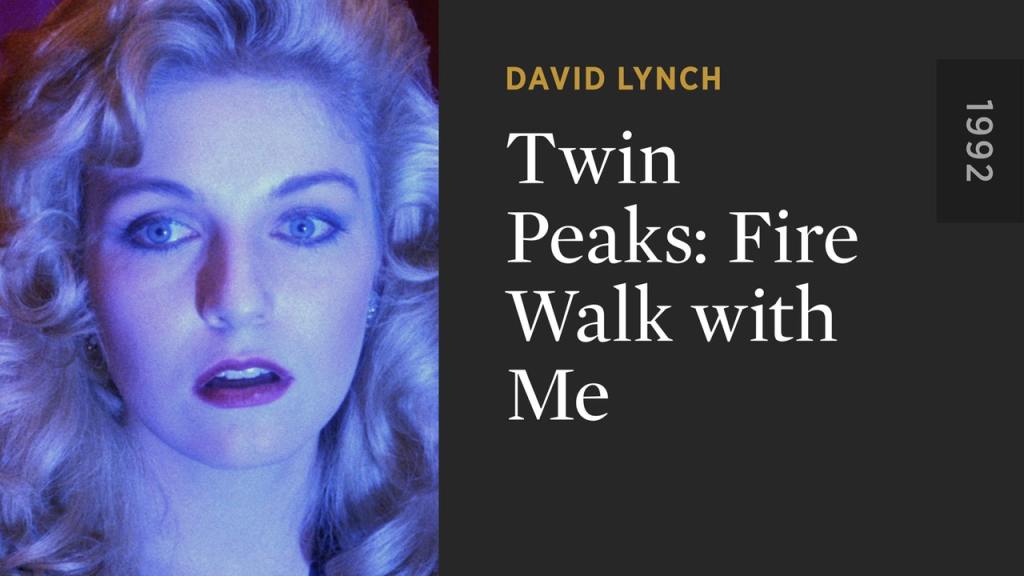
Do you think that if you were falling in space… that you would slow down after a while, or go faster and faster?
Faster and faster. And for a long time you wouldn’t feel anything. And then you’d burst into fire. Forever… And the angels wouldn’t help you. Because they’ve all gone away.
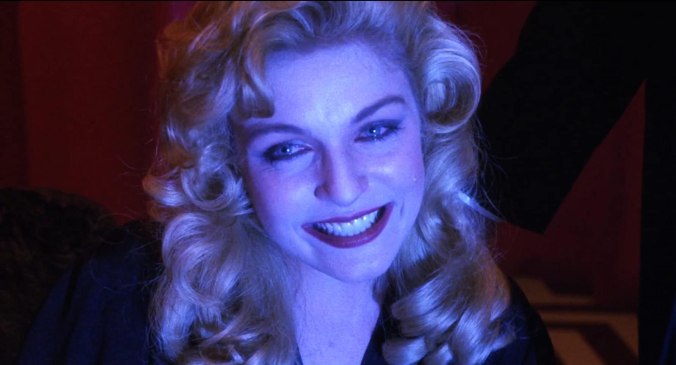
Donna Hayward and Laura Palmer in Twin Peaks: Fire Walk with Me
IMPORTANT TRIGGER WARNING!!!! Twin Peaks: Fire Walk with Me deals with some very intense issues, including rape and molestation. Michael and I talk about the depth in which they are addressed in the film, so please do not read further if such topics are triggers.
Twin Peaks was one of those early 90s shows I was old enough to vaguely remember happening, but not old enough to watch. My parents didn’t watch it, so anything I knew about it during its brief time on network television was from seeing magazine covers in the stores and commercials on TV. By the time I was in high school and interested in David Lynch, Twin Peaks wasn’t available to watch anywhere. It didn’t have a syndication run (no surprise there), and the home video releases were rare and incomplete. I didn’t sit down and watch the whole series until 2009 when my friend, Ren, endorsed it enthusiastically and I found a copy of the Gold Box DVD set containing the full television series at Borders. Using my 30% off coupon (how did Borders go out of business again?) I purchased the set and became immersed in Twin Peaks. I. Loved. It. I quickly scoured Manhattan for a copy of Twin Peaks: Fire Walk with Me, the critically panned and fan shunned 1992 prequel film. I found a Canadian DVD release at a small store off 38th street (now gone) and watched it.
Woah.
Twin Peaks: Fire Walk with Me is an absolute Lynch masterpiece. I cannot stress enough how intense this movie is. It is utterly horrific, completely insane, and intensely affecting. Plus, there’s David Bowie. Along with Mulholland Drive, I think it is my favorite Lynch film. (Sorry, Blue Velvet!)
February 24th is regarded as Twin Peaks Day. In the television series it is the day that Detective Cooper arrives in the small Washington town of Twin Peaks to investigate the murder of Laura Palmer. I really wanted to watch something Twin Peaks related on 2/24 this year. Since the film is in the Criterion Collection, that’s what I picked to watch so Michael would watch it with me.
Despite what Drew Grant suggests in his article from Observer, I would highly recommend that anyone interested in falling down the Twin Peaks rabbit hole start with the original series. Yes, the second season gets a bit wonky and uneven before Lynch steps in to pull it all together again, but I think there is a charm in the original TV series that is decidedly absent in the film. This is as it should be; the film deals directly rape, drug use, and murder. The show had a whole two seasons to introduce these types of issues and deal with them in a “primetime television” manner. (Remember, it was the 90s, so this was before shows like Law and Order: SVU regularly televised these topics. I’m actually shocked at how much the original show was able to pass by the censors…) The film needs to deal with them in just over 130 minutes, so there’s not much time for the quirky charm from the television show.
But if you want to jump right into the more horrific and terrifying aspects of Twin Peaks with no regard for spoilers for the TV series (most of which you’ve probably heard anyway since the first two seasons originally aired 30 years ago), feel free to start with this film. It can function as a completely stand alone film as well, so if you don’t think you want to make the full Twin Peaks commitment (what? how dare you!) and just want a taste, this may be the way to go…
Sidebar: It’s also good to note that the tone of this film is closer to the tone of the third season, completely directed and co-written by Lynch, which aired on Showtime in 2017. Watching the film, then the two seasons that aired on ABC, then the Showtime series creates a kind of sandwich where you start and end with the more horrifying elements and have a nice breather of charming quirkiness in the middle.
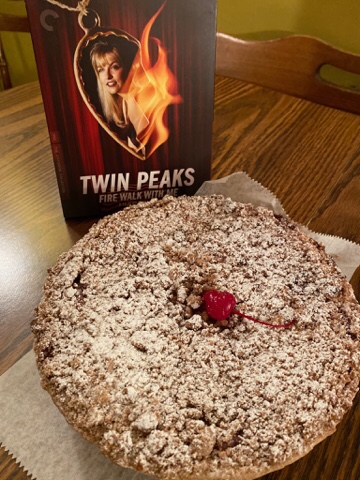
Michael: I think I went into it thinking, “Oh, God, Twin Peaks, it’s just going to be weird for weirdness’ sake, but it actually does tell a complete story, and it tells it really well.
Twin Peaks: Fire Walk with Me is mostly concerned with the final seven days in the life of Laura Palmer (Sheryl Lee). The discovery of her dead body is what opened the original TV series, sparking the nationwide question “Who killed Laura Palmer?” Key players in her life have more important roles in the film: father Leland Palmer (Ray Wise), mother Sarah Palmer (Grace Zabriskie), boyfriend Bobby (Dana Ashbrook), her best friend Donna (Moira Kelly in the film as opposed to Lara Flynn Boyle who played the role in the original TV series), secret boyfriend James (James Marshall), and several supernatural characters including BOB (Frank Silva), the entity that has been raping Laura since the year she turned 12. The first half hour or so functions as a prelude, setting up some important FBI investigative business (with Chris Isaak, Kiefer Sutherland, Kyle MacLachlan, David Bowie, and director David Lynch playing members of the FBI). It may seem jarring to viewers completely new to Twin Peaks when the film cuts to a year later and begins following around the 18-year-old Laura Palmer, but I promise all the threads lead somewhere. It’s the job of the viewer to follow them and put all the pieces together.

Michael: It’s definitely not my cup of tea. I only watch it…when I’m forced to…. But I can see how people find redeeming qualities in it because there’s a lot to unpack. And as we’ve discussed before with Solaris, you love the unanswered questions, the “Is it this? Is it that?” You like unpacking things.
Jordan: And there’s a difference between unpacking something because you’re just reading shit into it as opposed to directors like David Lynch, who really do give you a lot to unpack. That’s why I enjoy Twin Peaks a LOT.
Though there are a ton of details packed into his film, Michael and I focused on talking more about the overt plot line presented in the film. We don’t touch as much on the supernatural elements or the dreamlike/subconscious qualities imbued in the film for which Lynch is famous. (Maybe I’ll write my own essay on those elements sometime in the future…)
SPOILERS BELOW! For both this film and the TV show. As if I hadn’t made that clear enough already…
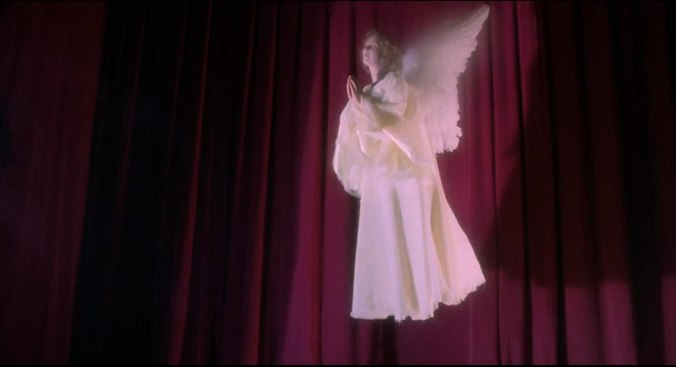
Michael: Before I forget to mention it…The one thing that really, really bothers me about this movie…are the two fucking loose threads on that angel’s costume! Just blowing in the wind like there’re no tailors in heaven! Like she one of the bad angels, she got her shit at a thrift shop! She’s the motherfucking Clarence [from It’s a Wonderful Life] of this movie. She don’t got her robes yet, she’s gotta wear her hand-me-downs. …Please.
Jordan: Well…that would fit in very well with Laura Palmer’s life!
Michael: In all seriousness, cause you’ve seen this, and you’ve watched all the special features, and you’ve watched the series and the new series…So my question is: Is this, in fact, just an allegory for, like, don’t fuck your kids, or is there some sort of otherworldly presence?
Jordan: There’s both. Both are happening. And that’s one of the reasons I enjoy the movie and series so much. I think it’s possible to watch the entire film as an allegory. You’d miss other elements of the film, but you can watch it as an allegory describing what happens to this girl when her father raped her and continued to rape her for a long time. It was really interesting watching the movie now because I don’t think I’ve ever watched this movie without watching at least some of the original series first.
Michael: Don’t watch the movie first, it gives it away!
Jordan: But that’s the interesting thing. Having not watched the series in a while and watching this movie now, I think you could be someone who watches the movie before the series, because then the mystery isn’t about who killed Laura Palmer, the mystery is all of the other things in this movie that seem not to make sense. Then the series begins answering all of those questions and putting everything together.
Michael: So you have to decide: Do you want the mystery like it unfolded in real time for people in the 90s, or do you want to know who did it first and try to unravel all the nuance-y shit?
Jordan: Yeah. Because I think that would be really intriguing. If I hadn’t seen the show before and I watched the movie, I’d be saying, “What is this? Why is this FBI agent so important? What’s going on here, what’s going on there?” The mystery suddenly becomes not “Who killed Laura Palmer?”, the mystery becomes what’s happening in the world of Twin Peaks, which if Mark Frost [the original co-creator and co-writer of the TV series, though he wasn’t involved in writing the film script] and David Lynch are going through the trouble to create this entire world with the murder of Laura Palmer at the center of it, don’t you want to be able to be interested in all of it instead of just the one mystery? That’s why when they solved the mystery in the TV series by revealing who killed her, they spun out because they didn’t have a central focus to include all those other elements.
Michael: People were drawn in by the murder mystery, and once that was solved it was like, “Oh, okay, it’s solved.” They weren’t drawn in by all the kooky shit.
Jordan: Right. Which actually has a lot of meaning and has a lot to do with the story of who killed Laura Palmer and why she was murdered. But it’s not easily graspable. So if you get rid of the thing that’s easily graspable, you’re left with a lot of esoteric metaphysical supernatural elements that then seem incoherent.
Michael: Yes. “Seem”.
Jordan: Seem is the correct word. That’s the thing: the more I’ve seen Twin Peaks and the more I’ve seen this movie, (I’ve seen this movie probably four times now) it makes a lot more sense every time I see it. I get more moments of “Oh, that’s what that means!” It’s fun! It’s fun to find all the pieces and put them together and see what it reveals about life and the human condition.
Michael: This is the first time I’ve watched this movie and stayed awake the whole time. The movie makes sense. But I think it would’ve been a better movie had it not followed the TV show. Because I think you go into this movie knowing that her father did X-Y-Z-L-M-N-O-P, and they make no bones about hiding that. Whereas if this was a standalone film, and you had gone into it not thinking, “Oh, her father fucked her and killed her”, it would’ve been a very interesting reveal amongst all the other…you know…nuttiness.
Jordan: I was thinking of that this time. When she goes to her room to find BOB looking for her diary, and she runs out of the house to hide, then sees her dad coming out of the house, she’s like, “No, not him! Not him!”, we still haven’t established in the world of this film that that man is her father. We only find that out in the next scene where she comes home and he’s sitting at the table. He’s telling her to sit down and we’re like, “Why is she obeying this guy who terrifies her?” and then she says, “Daddy.” That scene is where that relationship is being revealed in the movie.
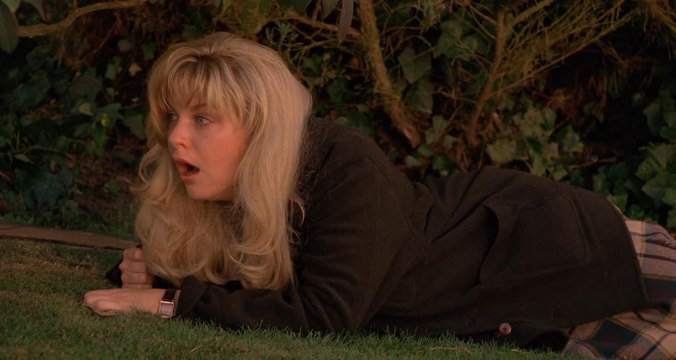
Michael: I also think that without the TV show maybe the characters wouldn’t have had to be at 10 the whole time. They don’t leave themselves anywhere to go. It has to be purposeful. Laura is frantic or drugged the whole movie. There’s no in between. There are moments where she’s playing this frenetic, frantic energy that’s like, “This is a very unnatural reaction. This is so much more extreme than the situation you’re in precipitates.” But then you factor in everything else and the feeling of the piece, so it works. It’s just so much high stakes, shaking, tension energy.
Jordan: It’s because it’s taking place over these seven days where all the blinders come down. She stops being in denial about her father raping her for the past six years, and she starts realizing what’s happening to her. That’s why everything’s at 10 the whole time, because we’re seeing the moment that everything has reached 10. We haven’t seen the build up to this, which is why every scene she’s swinging wildly from one extreme to the next. I think Sheryl Lee does an astounding job in this movie…
Michael: Oh, yeah, for sure!
Jordan: …just holding this all together in this one character and making it understandable.
Michael: The scene where Laura’s on the phone with James, and she’s drunk and trying to put on her stockings and talk on the phone, and really just doing her best to get the shit done, but she’s just so drunk, I was just like, “Same, girl. Same. We’ve all been there. I feel you.” Sheryl Lee plays all of her points well, but she does drunk and high very well. It’s very realistic in her portrayal.
Jordan: It’s one of those roles that it’s so hard to do because she’s trying to make it comprehensible to the audience watching what’s happening to her. And people act this way in real life. They go out into the world and one friend sees one side of them, and then another person sees another side to them. You put all the pieces together and watch the behavior, and it may still seem like nothing’s making sense. “Why is she suddenly screaming? Why is she laughing crazily? Why is she sobbing? She seems really insane!” But it’s just six years of being raped by her father.
Michael: She’s having her psychotic break.
Jordan: Right. And you can see the moments where in the past she must have said, “Well, I’ll start smoking. Oh, now I’m going to hang out with these people. Oh, I might as well be a prostitute to get more money and drugs…” You can see how all these separate things fell into place because of these horrific things that were happening to her in her life, and she just kept making bad decision after bad decision because she was trying to cope. This movie is the culmination of all those decisions. When you watch the TV series you learn gradually about all these things she had gotten involved in, and that’s the build up from 1 to 10. The film is just the 10. It’s just in reverse since this is the “prequel”. It matches the trademark of Twin Peaks playing with time and how time is not always linear, which they touch on at the beginning of this movie.
Jordan: It’s a dark movie. It’s so dark I forgot the humor that happens in the first half hour of the movie. I always forget there’s that humor there, and the quirkiness that made Twin Peaks the series so popular. Twin Peaks‘s distinctive quality is to have all this darkness with a quirky and nutty element thrown in. The humor is in that first half hour of the movie, but then you get to the other hour and forty-five minutes, which is just this barrage of pain, suffering, and unhappiness.
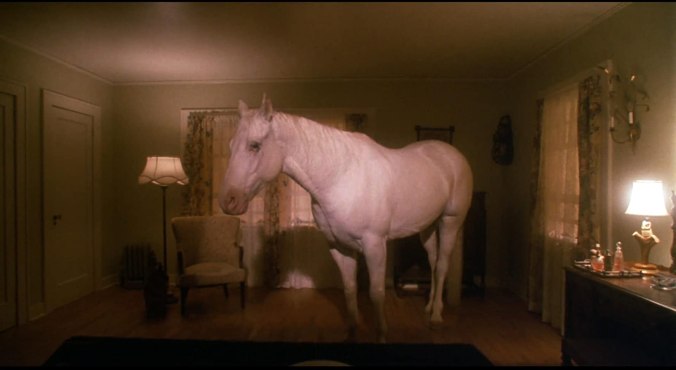
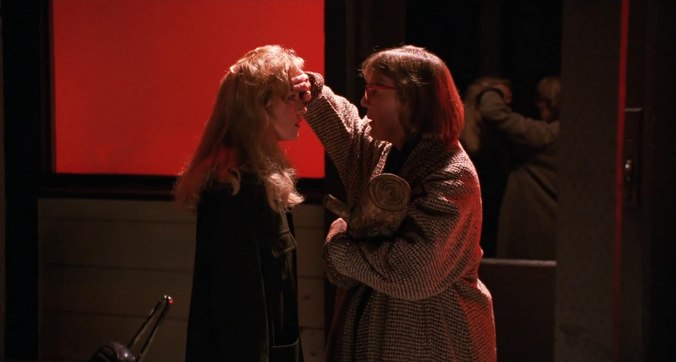
Michael: I’m not necessarily a fan of weirdness for weirdness’s sake. I feel like there’s a lot of that. And sometimes it does make sense. “Oh, the mom sees a horse and then it disappears.” Well, yeah, her husband drugged her! When you look past the “Huh? A horse?” you realize she’s having some kind of hallucination because her husband obviously put something in her…almond milk? Whatever she was drinking. Some kind of thick beverage?… It’s just one of those movies where the only normal person is the guy who runs the trailer park. Everyone else is some kind of wack job: “I carry around a log. No one knows why!” Everyone else in that town has some sort of issue. It just seems like so much. Is this Springfield? Everyone has to be some kind of character like on The Simpsons?
Jordan: That’s explored in the TV show.
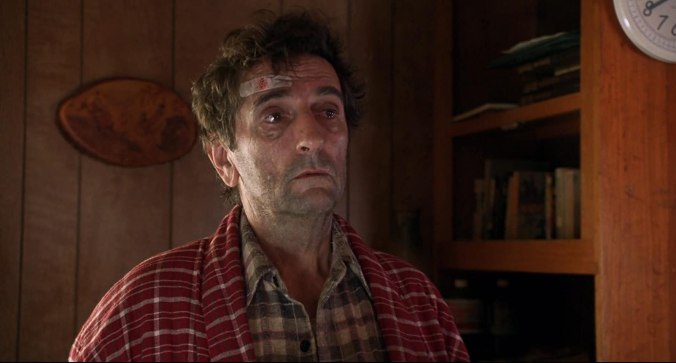
Michael: It’s just why I really enjoyed the guy from the trailer park. Because he was just normal, you know?
Jordan: He doesn’t stay normal through the series.
Michael: Well…don’t ruin it for me.
Jordan: Some crazy shit happens to him later on in the third season.
Michael: Though this is also my pre-conceived notion of this show and David Lynch in general.
Jordan: None of the craziness is for no reason. There’s all a reason for it.
Michael: I was thinking during this movie how you said Lynch originally wanted it to be a trilogy of films after the TV show ended. I bet he wanted to do a lot of shit that he just wasn’t able to do. And it must be so frustrating as an artist of that kind of meticulousness to then have some jag-weed who’s not as smart as him make him incorporate their bullshit into his idea. I imagine if he had the ability to just make his vision it would probably be really all encompassing and amazing and everyone would be like, “You have to watch these three films because holy shit!” He clearly had to have been pressured into something due to studios or restrictions for television or what have you.
Jordan: Well, for the first season of Twin Peaks he and co-creator Mark Frost didn’t have many restrictions on them because they made those first eight episodes before any of them aired. They were given this time and money and faith in their product and were like, “Let’s go do it”, and they made those first eight episodes. Then they had their break, the episodes aired, and when they came back for the second season the thing had become a phenomenon. So the second season didn’t just have pressure from the television studio but also societal pressure because they had become part of the pop culture zeitgeist. I think that if David Lynch hadn’t wanted to go make [his 1991 film] Wild at Heart and hadn’t had to deal with all those pressures, he would’ve stayed more involved in the second season, and the show would’ve lasted longer than just two seasons. As far as this film goes, I think he had carte blanche to do whatever he wanted with the film, but then when it got panned by critics and fans didn’t like it, he couldn’t get the money to make the other two films. Which is why we didn’t get another Twin Peaks until 2017.
Michael: It’s just a shame. You have this trilogy of stories you’re going to tell, but then the first one flops so you can’t tell the rest of the story. And it especially sucks for the people who loved it and are champing to get those other two movies. It’s like everyone makes The Lion, the Witch, and the Wardrobe, but the series always runs out of steam before you get to The Silver Chair, and I just want a good movie version of The Silver Chair!
The other thing that sucks about this is that the original two seasons and film differ vastly in tone from the 2017 season. 2017 takes a more deliberate, slower pace, and much of it spends times in locations outside of the town of Twin Peaks. Had Lynch been able to make the original trilogy of films like he wanted, this may not have happened. But by the time the third season was able to be developed both Lynch and Frost had moved on artistically from where they were in 1992, which affected the content of the most recent season and how it was presented. This is not to say the third season is bad or less than the original seasons and film, it’s tone is just artistically shifted.
And now, a brief pause in the serious discussion for some levity…
There’s a game that Michael and I play when we watch movies (which I’m actually surprised I haven’t mentioned in any reviews up until now). It’s called “He Could Get It”. While watching the movie, one says, “He could get it” if a person, be it leading character or background extra or anyone in between, appears onscreen who could…well, get it.
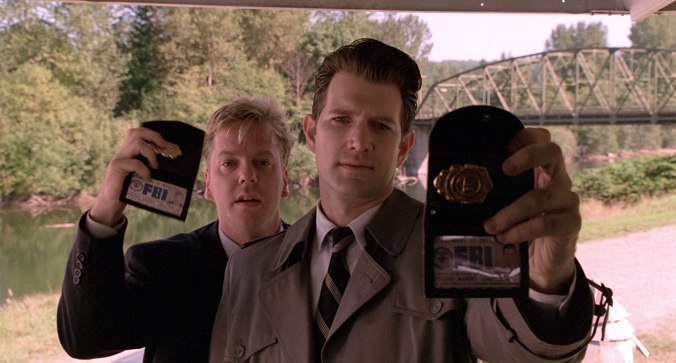
Michael: Chris Isaak could get it. Oddly enough, those two rape-y guys at the bar trying to fuck those teenage girls could get it, the blond one more than the other one.
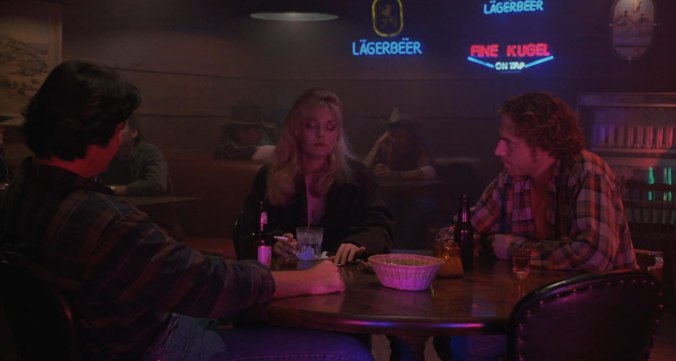
Michael: T-bird’s boyfriend could get it…
Jordan: T-bird’s boyfriend?
Michael: Yeah, Danny Zuko could get it, but not Maxwell Caulfield.
Jordan: What?
Michael: Because she had the Danny Zuko boyfriend and then she had the Grease 2 boyfriend on the motorcycle!
Jordan: So you think Bobby could get it, but James couldn’t?
Michael: Yeah!
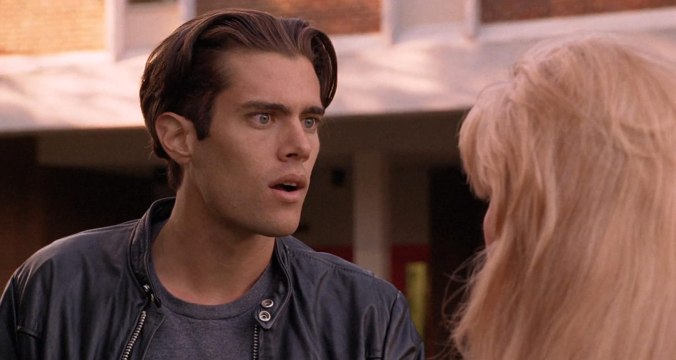
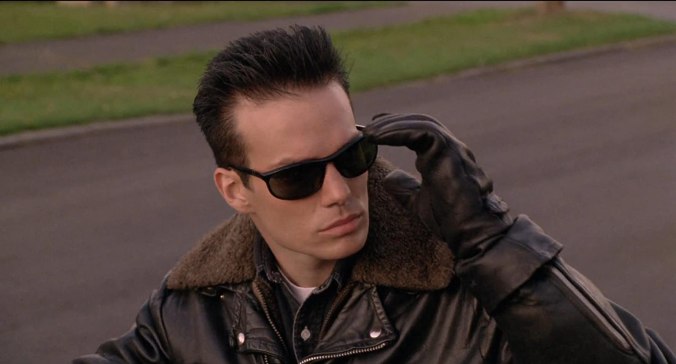
Michael: So yeah. Moral of the story is “Don’t fuck your kids” and “Don’t do drugs”. It’s a twofer.
Jordan: Pretty good moral there. Especially that first one.
Michael: But could you imagine? You’re Donald Trump-ing it, wanting to fuck your daughter, and you’re hooking up with a prostitute that looks like her, and you’re like, “Yeah, bring your friends, get them in here, too!” And then you see her friends, and it’s your fucking kid and that’s how you find out your daughter is a prostitute! Because you were going to be the john! Like, that’s a fucked up relationship right there!
Jordan: He drove her to the prostitution.
Michael: Right, but could you imagine? That moment of “That’s my kid”?
Jordan: Well, we did see a scene allllll about it in the movie….
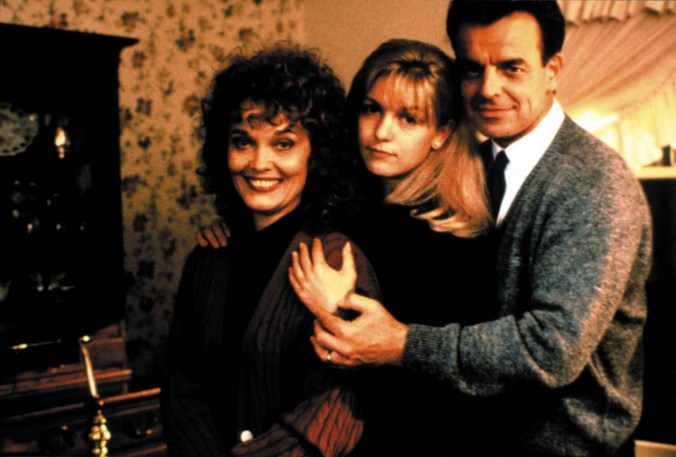
Michael: And Grace Zabriskie does a fine job playing the mom that knows what’s going on but can’t bring herself to face it, but I just don’t understand that. I mean, it’s a thing we hear happens over and over. It happens in real life, I just don’t understand being the person that’s like, “Oh, yeah, my husband’s fucking my daughter. I’m just not doing anything about it.”
Jordan: It must be such a difficult thing to reconcile in her mind. Because when you think about it, this is someone she fell so much in love with, she married him, she had a child with him. As that child is growing up, she starts suspecting something, she doesn’t know… Then by the time it becomes something she knows, he’s already been doing it. For years! That would just break her brain. She cannot reconcile the person doing that to her child with the person she fell in love with. Which is why I guess I understand when people say things like, “I wasn’t sure” because unless you’re walking in on it happening…
Michael: It seems so unfathomable. You’re just like, “It can’t be happening.”
Jordan: Right. And supernatural elements of Twin Peaks aside, I can see how the character of Sarah Palmer doesn’t want to acknowledge it, but she wants to do something about it, but she just can’t bring herself to face it. It’s something I think Grace Zabriskie plays very well.
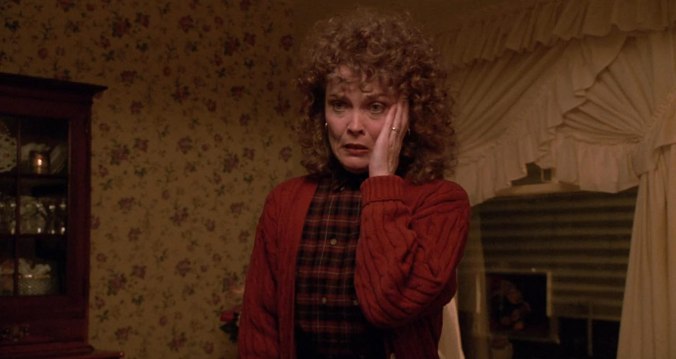
Michael: I guess most of the time we see this plot line in things, it’s “mom’s new boyfriend”. And you’re like, “Didn’t you know your new boyfriend was that way when he met your kid?” But if it’s your husband that you’ve been with for years and you had the kid together and raised her together, that would be a lot to face.
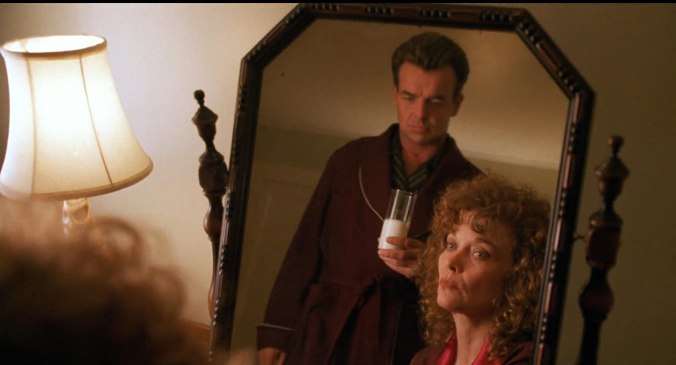
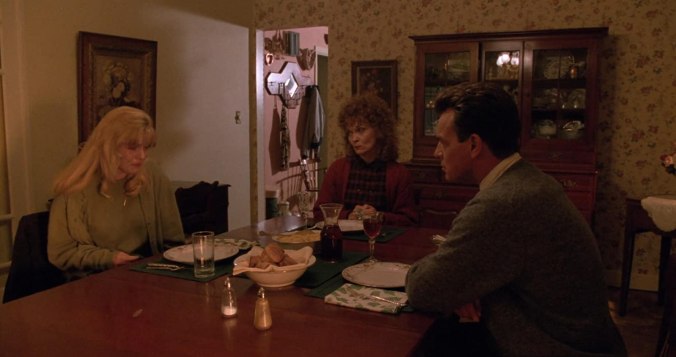
Jordan: And I could be misremembering, but I believe at some point in the TV show they mention how Sarah and Leland Palmer were high school sweethearts. So they’ve known each other for a long time. Decades. It’s one thing I kind of wish I could see more of in the film–Sarah Palmer’s reaction to everything that’s going on. You get some of it in the movie, like that dinner scene where she doesn’t know what to do and then all of a sudden she shuts down and decides she’s just going to smoke a cigarette. And you get some of it when he brings her that nighttime milkshake or whatever, and she doesn’t want to drink it because it’s drugged, but he’s like, “Go ahead.” You get these glimpses, but you don’t get the full weight of what she’s going through and how much it’s tearing her apart.
Jordan: I think this film deals with some very intense issues that were not being talked about at all in popular culture in 1992. Things had alluded to stuff like this, soap operas had plot lines and films like Chinatown had happened in the 70s, but they aren’t being directly dealt with. You’re not following the people as these events happen, it’s always a dramatic reveal by a character talking about something that happened to them. Fire Walk with Me is very direct.
Michael: It tells you the story about these people. It dives into their psyches.
Jordan: Really intensely.
Michael: I think it’s a thing that happens more often than we like to think about. We probably all know someone, probably more than one person, who was abused by a family member. It’s a story we should start telling more often because of how frequently that it happens, and we just pretend that it doesn’t. We need to stop pretending that it’s few and far in between. It can happen to anyone.
Jordan: One thing I appreciate about this story being told in Twin Peaks: Fire Walk with Me is that it’s from Laura’s point of view, how she’s just snapping and losing it, and you can feel how much despair is happening. I feel like so many times we see this plot line in TV shows and movies now, it’s not that they don’t convey the despair, it’s just always dealt with in a very practical, real world way, which creates a kind of distance for the audience and makes it more “accessible”. They’re going to tell people, and then get the police involved, and then have a trial. Maybe there’s a scene where the victim physically fights their abuser and wins or they tell the person off or something. But there’s a lot of psychiatric shit going on with the victim! It doesn’t just stop because they tell someone and the molester gets arrested and goes to prison or because they tell the person off one time. The victim has survived something so traumatic, and now they have to live the rest of their life. It’s a lifetime of putting themselves back together and trying to live without letting the trauma get in the way of their life. And people don’t understand why they can’t function the same way as everyone else.
Michael: And it’s not like this person is like, “This guy molested me and he’s a monster and I hate him.” There are lots of aspects of “That’s my dad, someone I grew up loving.” In the case of Laura Palmer, it didn’t start until she was hitting puberty, so she had twelve years of “This is my daddy. I’m his princess. I love him.” And that doesn’t go away when he starts to abuse her. So there’s that element of how hard it is to reconcile in your brain, the feelings of, “I love my dad. I hate my dad.”
Though Michael and I agree that these stories need to be told more often, we both acknowledge that it is a very difficult thing to do. It’s hard for stories like this to get financing in general without fitting into a genre film and being made to follow a genre formula. It’s also difficult to find ways to tell these stories without completely alienating your audience due to how painful the topic is.
One of the reasons Twin Peaks: Fire Walk with Me works so well is the artistry of David Lynch. He doesn’t fit into any particular genre, even though he borrows elements from many recognizable categories. There isn’t an attempt to present the material in a traditionally recognized structure. The film says what it has to say the way it has to say it. The sad part is this lack of easily recognizable structure can also alienate people from the film, especially if they can’t let the experience of the film wash over them and instead try to make the movie fit into some kind of recognizable form of entertainment. It’s easier to accept the film if one thinks of it as a painting made up of many different kinds of brush strokes that don’t look cohesive at first but can be seen as a fully formed work of art when viewed on its own terms.
Jordan: People classify this film as a horror movie more often than not.
Michael: It really isn’t.
Jordan: I think it is.
Michael: I’d give you psychological thriller, but it’s not a horror movie…
Jordan: I’d call it psychological horror.
Michael: …there’s nothing scary about it.
Jordan: I think there’s a lot scary about it!
Michael: It’s too weird to be scary. Any moment you might be like, “What’s going on? Oh, there’s a horse now. …Wait, what was I scared about?” You know what I mean?
I do know what he means. It’s not like a slasher film or a straight genre horror entertainment. Twin Peaks: Fire Walk with Me can be a horror film in that it deals with some really disturbing material. A lot of the film operates on subconscious connections. You feel upset and disturbed and don’t always know why, other than the fact that your senses are being assaulted by a story of deep pain and evil.
Watching the film with Michael was the first time I’ve watched it with another person that I didn’t get freaked out at some point in the film and feel utter dread. Maybe it’s because I was more aware of being in the room with him and less lost in what was happening on the screen.
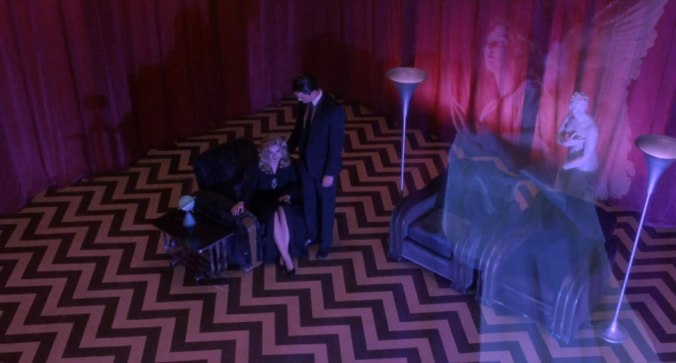
If you are someone who enjoys art that delves into the darkest sides of humanity and explores it to gain catharsis and illuminate aspects of the human condition, Twin Peaks: Fire Walk with Me is an absolute must see. Lynch has the uncanny ability to look the darkest elements of existence dead in the face and bring them to light. Unlike the television seasons, Twin Peaks: Fire Walk with Me ends with hope. The final images in the film are of Laura Palmer seeing the angel she has prayed for her entire life yet never felt she would ever get, felt she could never deserve. The message seems to be that amongst the blackest darkness there is a ray of light for everyone, even if it comes at the end.
Michael’s Rating: A solitary, yet reoccurring locket of the utmost importance that no one ever sees and nobody ever opens…..and they never will….
 Jordan & Michael Watch Movies!
I was able to see this film thanks to Jordan’s need for the exclusive record and a schedule conflict, and oh what am emotional rollercoaster that was – if it was a ride that only goes up, building tension, and building and then making you get out at the top so that you’re dazed by pent up adrenaline rather than catharsis. That’s what makes it horror. It releases you alone into the world with bloodcurdling knowledge and no opportunity to collectively scream. There be monsters. There be BOBs and Lelands
And Agent Coopers and angels only show up when the damage is done. I’m so happy this movie exists. Everyone should watch it. I’ll probably never watch it again. The show? I could rewatch that for sure.
LikeLike