Cluny Brown
Directed by Ernst Lubitsch
“In Hyde Park, for instance, some people like to feed nuts to the squirrels. But if it makes you happy to feed squirrels to the nuts, who am I to say, ‘nuts to the squirrels?'”
Professor Adam Belinski in Cluny Brown
Heaven Can Wait
Directed by Ernst Lubitsch
“I presume your funeral was satisfactory?”
“Well, there was a lot of crying, so I believe everybody had a good time.”
His Excellency and Henry Van Cleve in Heaven Can Wait
Ernst Lubitsch is one of my favorite classic film directors. His films have been described as having the “Lubitsch touch” which the Criterion’s website sums up as “the director’s delicate hand, effervescent humor, and economy with words and images”. I enjoy myself every time I see a Lubitsch movie. Between 1914 and 1948 he directed over 70 full length features and shorts, many of them classics.
I was sick recently with a stomach bug and feeling just miserable. Michael suggested we watch two Criterion movies to make me feel better! I just had to pick two of Lubitsch’s films. I knew I’d get films with substance that still felt light and airy, the perfect kind of films to watch when one is feeling down or sickly.
I picked Cluny Brown, which I hadn’t seen yet, and Heaven Can Wait, one of my very favorite Lubitsch titles. Both films were made in the later half of his career (1946 and 1943 respectively) and are great examples of the “Lubitsch touch” if you’re curious to know what that is.
HERE BEGIN THE SPOILERS. Don’t say I didn’t warn you….
We started with Cluny Brown, a 1946 comedy set in England on the cusp of WWII. Cluny Brown (Jennifer Jones) just wants to be a plumber. By complete happenstance (in a marvelously silly meet cute) she is introduced to the forward thinking Professor Adam Belinski (Charles Boyer) when she stops by a London flat to fix a clogged sink. Though the apartment owner expected a “real” plumber, Cluny assures him she’s seen her uncle (the aforementioned “real” plumber) do this many times, and she thinks she can handle it. And, by gum, she can! Belinski is impressed and tells her that though most times people say, “Nuts to the squirrels”, sometimes one has to say, “Squirrels to the nuts”! But Cluny’s uncle is not too happy about it. He tells her she needs to learn her place and sends her off to be a domestic servant in the country at a proper household. This proper household just so happens to be where Professor Belinski is staying during his time in England! Cluny struggles with fitting in to domestic service at the same time she believes she’s falling in love with the local chemist, a Mr. Wilson (Richard Haydn, later famously known as Uncle Max from the film adaptation of The Sound of Music), who is a frightfully boring and conventional man. Belinski needs to convince Cluny that he’s the one who loves her before she goes and marries a man who doesn’t even appreciate good plumbing!
Michael: It was a cute movie, a fine film. I’d probably give it a second watch.
Jordan: I like it. It’s a fun, light, romantic comedy where I don’t feel like the lead female is being forced to be the typical woman of the 40s. Though, I guess she is being the woman of the 40s because she wants to work. She doesn’t want to be in service, she wants to work in a practical field. She’s good at it.
Michael: A woman of the future!
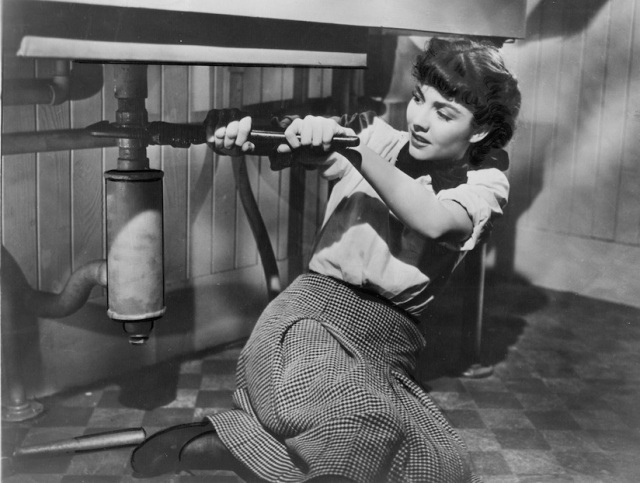
The movie is set in the late 1930s. There is certainly a conflation of two ideas of women in the workplace being presented here. First is the view from the 1930s that women are caught in social roles that no longer have a place in society. The second is the same view only from the perspective of a post-WWII 1940s society. Women have already been working in practical fields traditionally occupied by men due to the men being conscripted for war service. The social traditions have been broken by wartime necessity; the film argues that they should stay broken, that the world cannot go back to where it was before, because these social conventions were already on the verge of being done away with prior to the war happening.
Jordan: There’s a lot the movie shows about women’s liberation emerging at the time. Belinski is attracted to Cluny for being liberated. That’s part of her charm for him. And Cluny is attracted to this idea of people being able to just live their lives and be happy in their lives. It’s the reason she’s attracted to Mr. Wilson as a chemist. She likes him because he has the shop, he does important things that he likes doing, he’s smart, he has a nice house… She wants these things, but she wants them because they spring from him doing something important that he likes doing. She wants to do something she feels is important.
Michael: She did not really like that chemist, Mr. Wilson. She did not want to marry him. I don’t think.
Jordan: I thought she did want to marry him, but it was because of the idea of what he represented to her, not necessarily him.
Michael: Wilson’s mother (Una O’Connor) comes out and just coughs in that entire scene, and you can see on Cluny’s face that she’s like, “Oh, I don’t want to live with that.” And there’s the moment directly afterward where Mr. Wilson coughs in the exact same way, and she gets this look on her face that’s like, “Well, this is going to be my life…”
Jordan: But when Mr. Wilson is playing the harmonium and she tells him what she pictures while he’s playing it, it’s an idea of how heroic he is doing something that he told her he did. He said he volunteered with the fire department, so she pictures him doing the volunteering and being successful at it. That’s what attracts her to him. She doesn’t see him for who he really is.
Michael: Right.
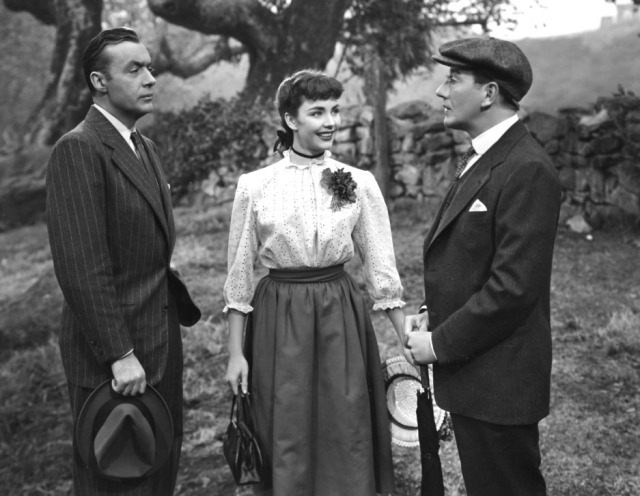
Jordan: So I think she does want to marry him, she just doesn’t realize she wants to marry the idea of him rather than who he actually is. Until he starts saying things like, “You’re silly, I can’t marry someone who does this,” and she thinks she has to stop being “silly”. It’s what her uncle said to her, it’s what the maid and butler said to her, so she’s finally like, “I guess they’re right.” I think it’s a good take of women’s liberation because it’s not like she’s out there saying, “I want to go to work!” and outrightly fighting against all of society’s restrictions. Everyone thinks she’s fighting against them because she naturally does what she wants to do, what she’s good at, and what feels good to her.
Michael: I guess you could say it’s indicative of women’s liberation at the time. The idea is she wants to be able to do the things she wants to do, but she still wants to have the traditional marriage and family structure.
Jordan: I think that’s indicative of women’s lib today! The idea is to be able to choose your own choices.
Michael: Well, you know, you can choose to choose, or you can choose to spin, or you can spin your choice, or you can spin your spin…
(That’s a Peggy from King of the Hill reference for anyone who doesn’t know.)
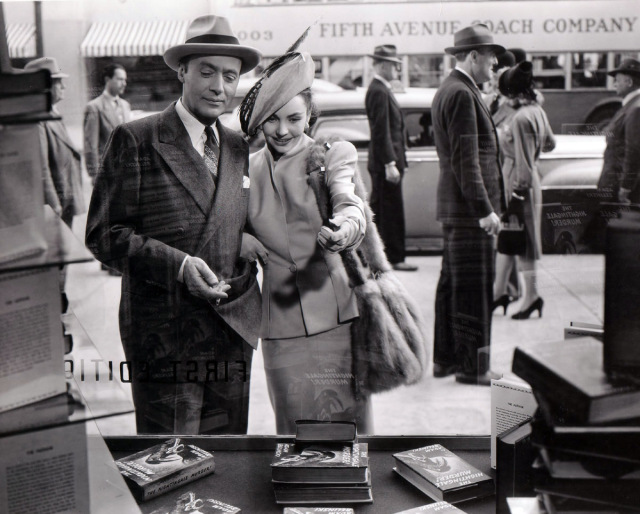
Jordan: The end isn’t about how Cluny’s going to have a baby with Belinski and he’ll say to her, “You can’t be a plumber anymore!” He’s going to be like, “I’ll watch the baby”, or even “Take the baby with you if you want!” He’s going to be supportive of whatever she wants to do because that’s what he loves about her. She has a passion for what she wants to do, and she’s good at it! She says there’s lots she needs to learn, but she also says she can do this. And she does it. That’s what he loves about her. He will provide for her and wants to be successful so she can have everything she wants and they can have a good life together. He’s also going to be the person saying, “Go fix some pipes if you want to fix some pipes!” That’s the breakdown of those old societal structures the other characters in the movie represent. It’s an acknowledgement that the structures don’t work if they prevent people from feeling fulfilled. Which is the entire theme of the movie.
Michael: Here’s my question: Do you think this was Jullian Fellowes favorite movie growing up, or just something he saw? Because you’re not going to tell me that the butler and head housekeeper in this movie are not Mrs. Hughs and Carson from Downton Abbey. You aren’t going to tell me that at all! Because it was the exact same characters and the exact same relationship. It wasn’t just a butler and a housekeeper that were dutiful, it was a butler and a housekeeper that are all, “We aren’t going to stand for these things!” It’s personally offensive to them that these traditions are being broken. Plus they’re in love, but we’re not going to talk about it. They’re clearly into each other. It had to have been inspirational to Jullian Fellowes when he was writing Downton Abbey. It couldn’t’ve been a coincidence.
Jordan: It might have been something that just happened, but yeah, I can see that.
Other than the obvious “women in the workplace” theme that continuously recurs through the movie, there’s the double entendre theme of Cluny’s plumbing (and utter enjoyment of it) being a metaphor for sex. Criterion includes the excellent essay by Siri Hustvedt with the disc and on their website. We see and hear Cluny go to work, pounding away at the pipes. When she’s finished, she’s flushed and happy, utterly satisfied and feeling good about being in her body. She is stopped short and shamed by the obvious disdain and revulsion she encounters from Mr. Wilson and company over what they view is her blatant and wonton social gaff. Belinski embraces her enjoyment of “banging the pipes”, does not want to shame her, and wants to take her away from people who would change her natural inclinations to enjoy herself and her passions.
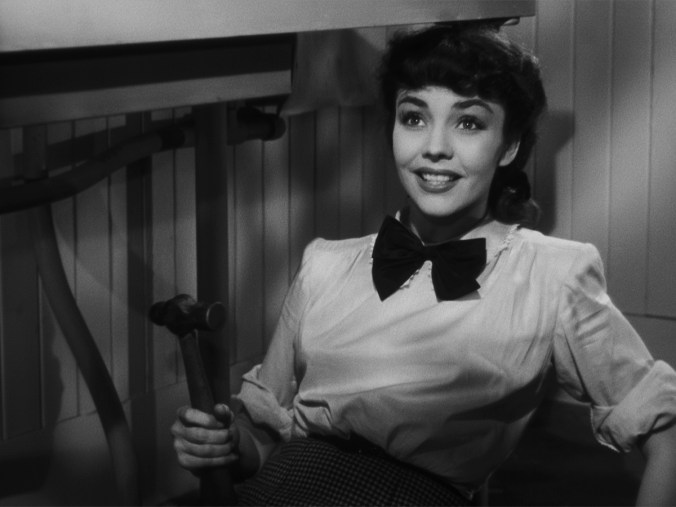
Michael’s Rating: Three French accents that we’re pretending are Czechoslovakian
After spending time with Cluny Brown, we moved on to one of my very favorite Lubitsch films, Heaven Can Wait (tied for number one with two others–try to guess which ones!).
Heaven Can Wait was nominated at the Academy Awards for Best Picture and Best Director, losing both awards to Casablanca. It’s not the sweeping melodrama of Casablanca, but honestly, I can say this movie certainly holds its own against that well known property, albeit as a very different film.
If you really stop to think about it, Heaven Can Wait really shouldn’t be a film I necessarily like. Henry Van Cleve (Don Ameche) has died and has decided he should not be going to heaven. He should be going to…well, the other place. So down he goes. He encounters “His Excellency” (Laird Cregar) at the gates who asks him why he thinks he belongs down there. Henry tells the story of his life, flashing back to New York City during the Victorian era and telling about how he was raised in a rich family as an indulged young man with a rapacious lust for women. His grandfather, Hugo Van Cleve (Charles Coburn), is a bit more down to earth and understanding of his rapscallion of a grandson, while his parents and grandmother apparently have blinders when it comes to being aware of how mischievous Henry is. When Henry meets Martha Strabel (Gene Tierney), a young woman from Kansas currently engaged to his cousin Albert (Allyn Joslyn), he falls instantly in love and vows to win her over. During their marriage Henry continues on with his dalliances with other women, even though Martha is his one true love. They have their ups and downs, raising a son who turns out to be quite like his father.
Michael: I always have a problem with stories that follow someone’s entire life because it makes it seem like such a blink of an eye. It makes it seem like life is so short and fleeting and almost meaningless.
Jordan: But his life wasn’t short and meaningless. I think that’s the point of the movie.
Michael: Right, I understand that. But for me, it just makes it look like a pin point in the vast expanse.
Jordan: It kind of…is…though…
Michael: I know it is. I don’t care for that aspect of it. But that’s me, personally. I did enjoy the film. I liked it very much.
Jordan: So you’re going to be the grandfather [Hugo Van Cleve]?
Michael: Absolutely. 100 per cent. The one that’s like, “Do you not see what’s happening? He’s fucking the nanny! How old are you, son?”
Jordan: She wasn’t the nanny, she was his mother’s lady’s maid who was teaching him French!
Michael: Whatever. The grandfather was just a very lovable character. I enjoyed him.
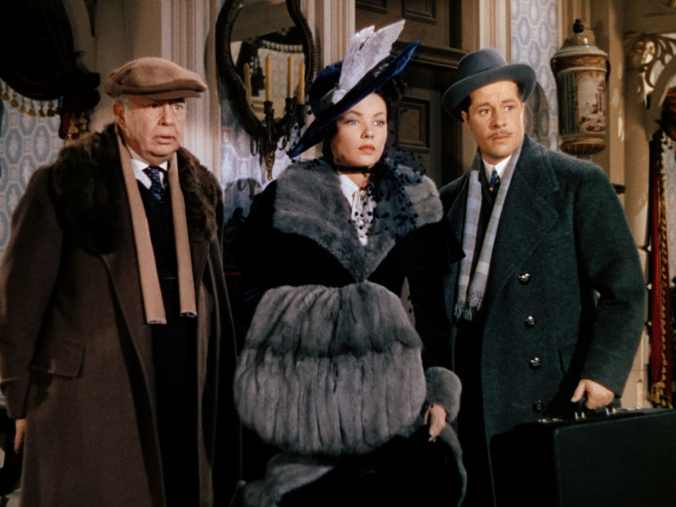
The reason I say this shouldn’t be a film I would like is because this main character is kind of…well, a douche! Not that he’s not understandable in everything he says and does. But there are several moments where it’s clear he has cheated on his wife, she’s clearly upset by it and doesn’t want it to continue, and then he wins her over again. He’s a rich, entitled man who relies completely on his charming nature to be able to do whatever he wants to do, and he gets away with it! True, nothing he does is necessarily evil, but he’s often very inconsiderate, hurtful, and vain.
But I love this movie anyway! I love watching the different vignettes of his life. I love seeing how he was shaped at a young age and how it affected his behavior over the rest of his life. I love seeing that he really does love his wife, and I love seeing her forgive him. Despite how his actions hurt her, they truly do love each other. Now, it’s clear this story is being told from his point of view, so who knows what his wife really thought of him, but her love for him is genuine in the portrayal of her in this story.
Michael: Isn’t that the whole point? That on paper this guy seems like a person who should go to hell? But in the end, you find out he shouldn’t. Do you think he actually slept with other women while he was married?
Jordan: I’ve seen this movie enough times to think yes, he did. But whether he did or not, he was still going out and flirting with other women and buying them expensive gifts and such. The relationships he had with other women were vanity. It’s how he felt young. They weren’t actually meaningful. I do believe that he loved his wife. She was the most important thing to him in his life, ultimately.
Michael: Do you think that’s why in the end Martha said it didn’t matter?
Jordan: Yeah.
Michael: [getting a suggestive tone in his voice] And you agree with that?
Jordan: I don’t agree with that, but I’m saying I see how it’s understandable…
Michael: So it’s understandable, if that ever happened, [Jordan laughs] it’s very…
Jordan: [trying to stop laughing] That vanity is understandable?
Michael: Yes.
Jordan: Vanity is understandable, though the actions may not be excusable.
Michael: And that his wife was ultimately the most important thing, so those other things didn’t matter.
Jordan: [still laughing] Do you understand it?
Michael: I mean…hearing you say it…[Jordan laughs really hard now]…I can see how that might be a thing, yeah, sure. Because you know, you are smarter than me, Jordan, so if you say that’s what it is…
Jordan: See, you understand why I like this movie so much. Because he’s just so charming and cute and funny and clever…
Michael: That poor naive sap from Kansas didn’t even know what was happening…
Jordan: Didn’t, huh? [Michael laughs] But she did, actually. In the end, she was smarter than him about a lot of things…
Michael: She just knew all his tricks, that’s all.
Jordan: …because when it came to their son being in that flirtatious relationship with that actress (like Henry used to do when he was young and unmarried), Martha kept telling Henry, “Stay out of it”. But he still went and paid that woman he didn’t want his son to see $25,000 to break it off with his son. Then he found out she had already broken off with their son, so he paid her the money for no good reason!
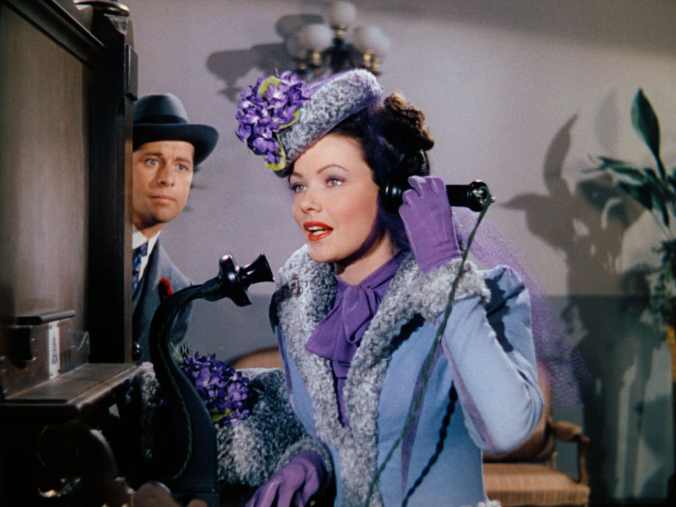
Michael: I find it interesting that the more of these older movies that we watch in the Criterion Collection…it just never really occurred to me how much Hungarian immigrants shaped Hollywood at the time. It seems like a kind of across-the-board they were the screenwriters and actors and directors…
Jordan: There were a lot of Hungarians and a lot of Jewish people immigrating to America throughout the 20s, 30s, 40s…
Michael: Yes. They shaped so much of Hollywood, which shaped so much of the country, and yet America still doesn’t have a point of reference for their ancestral lands because they shaped it in the way that America was, not in the way that they were. They still pepper in these little bits and pieces of Hungarian culture here and there. Like a little homage. Like…what was that movie where they go to Connecticut for Christmas?
Jordan: …Christmas in Connecticut…?
Michael: That’s the one! There’s the chef character that’s always saying things like…
Jordan: “That’s not goulash!”
Michael: Right, exactly!
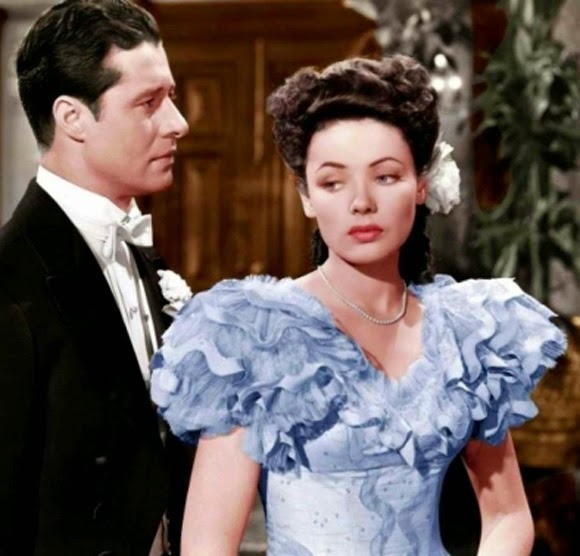
Michael: It’s weird that they got a whole different actor to play Henry when he met Martha, but Gene Tierney is the same through the whole movie.
Jordan: ….what?
Michael: Yeah, they got that other guy to play young Henry.
Jordan: …That was Don Ameche.
Michael: No, it wasn’t.
Jordan: What?! Yes, it was!
Michael: I did not recognize Don Ameche.
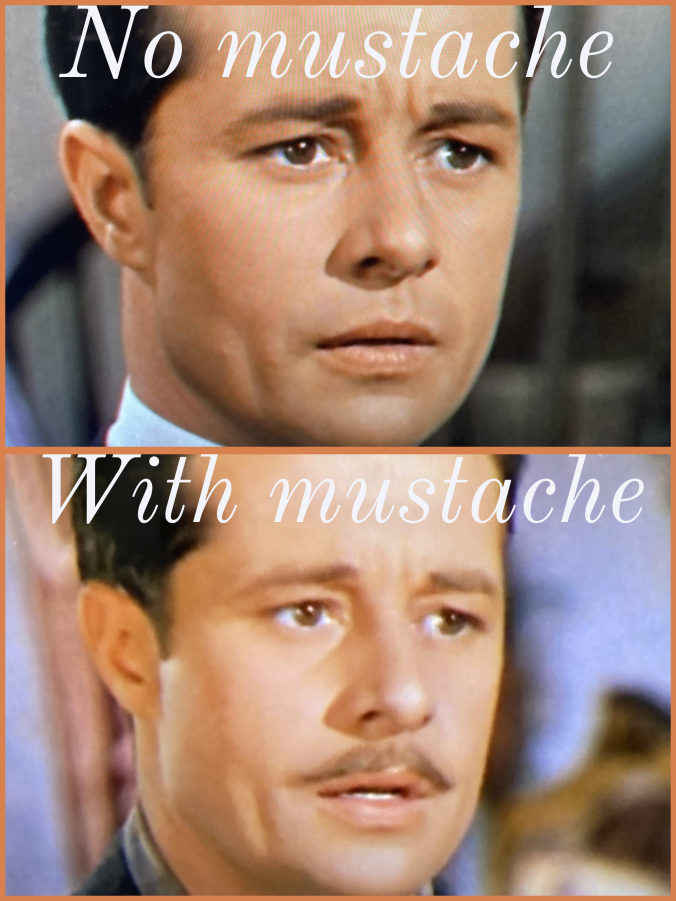
Jordan: He just added a mustache and some grey at the temples!
Michael: Well, the difference is, I knew him as an older man with a mustache. Like, in the 80s when he was making films, he always had that mustache. So to see him as a young man without a mustache, I did not recognize him. Then he walks out looking the way I remember him, just much younger, and I was like, “Oh, there he is!”
Jordan: We were talking about how much he could get it without the mustache!
Michael: No, I said he could get it when he came out with the mustache! I mean, maybe he could’ve gotten it without the mustache.
Jordan: He could’ve got it without the mustache.
Michael: Well, it wasn’t as immediate he could get it without the mustache.
Jordan: The moral of the story is, Don Ameche could get it.
Michael: But not the guys who played his father and his son. It skips a generation. Because the grandfather could’ve gotten it. Not because he was cute, he wasn’t hot…
Jordan: It was his attitude?
Michael: That’s the kind of personality that could get it. He’s a fun person. I’m sure I’ve had sex with some people because they thought I was fun, not because they thought I was cute, so…you know.
[We go back and watch the scenes of young man Henry versus older Henry via a streaming service not affiliated with Criterion]
Michael: No…I still…no…
Jordan: You don’t recognize him?!
Michael: …Has this been colorized? Was the disc version in color?
Jordan: …YES! This movie is in technicolor!
Michael: Oh.
Jordan: Are you kidding me?! We just watched this whole movie and you didn’t know that was Don Ameche, and you didn’t know it was in color?!?!
Michael: I guess it was, because her eyes were very blue… In my defense, this streaming version the color looks different.
Jordan: It does look different. Criterion’s version on disc is an excellent restoration. It’s well balanced, and the streaming version from this other service is clearly not from the same restoration.
Michael: I mean, I know that’s him, and I can see it now that I know that’s him, but that does not outwardly or offhandedly look like him to me. At all.
Jordan: … Wow. Okay.
Michael: So yeah, Don Ameche needs a mustache if he’s going to get it.
Michael: It was sort of like It’s a Wonderful Life, but as if it were after George died. It had that kind of feel to it. I enjoyed it, I’d watch it again.
Jordan: It’s a Wonderful Life is more sentimental, though. This is not as much of a tearjerker as It’s a Wonderful Life. It’s the difference between a Capra touch versus a Lubitsch touch. Capra does more of the emotional manipulation. Watching Cluny Brown and Heaven Can Wait side by side, you can really get a feel for the “Lubitsch touch”. You can see how he deals with potentially heavy material with such lightness without it seeming frivolous. None of it seems inconsequential; when sad moments happen, they affect you. That moment when Henry and Martha are dancing together in the hallway and you find out it was their last anniversary together, you really feel sad during that moment. Then we have to move on to the next scene because it’s a survey of Henry’s life, so we can’t stop. But you don’t feel like the next scene cheats the emotion of him having that last dance with his wife. Somehow, Lubitsch is able to do these kinds of stories and still give the gravity of the situation enough weight to be affective while moving the story along.
Michael: He gives it weight without weighing it down.
Jordan: Exactly.
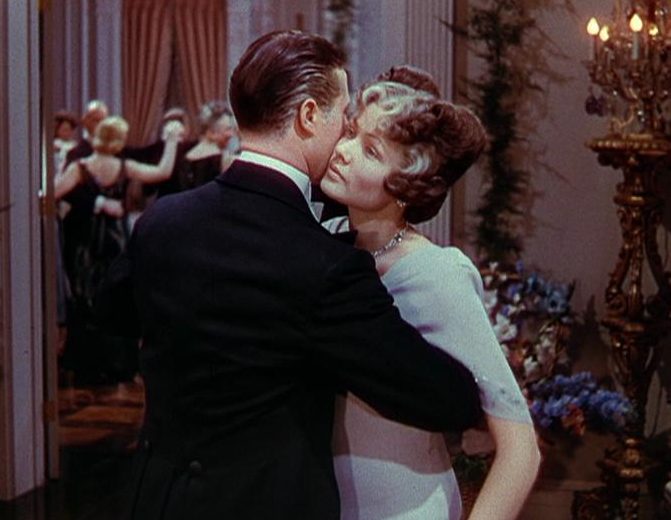
Michael: I think this was really good. It was a very well written film, well shot, well directed… It was incredibly well acted. I did think the ending was a little disappointing because for me it needed one more step. It needed the elevator to heaven to open and for Hugo Van Cleve and Martha to be there.
Jordan: I think that would’ve been too much.
Michael: In the sensibility of its time, it had the perfect ending. In the sensibility of my time, if this movie had been made in 1986, the elevator would’ve opened and they would’ve been there.
Jordan: See, I think that’s too much because the entire movie is him talking to the devil. Done. Story is done when he leaves, when the conversation is over.
Michael: I know. But I still wanted to see the reunion.
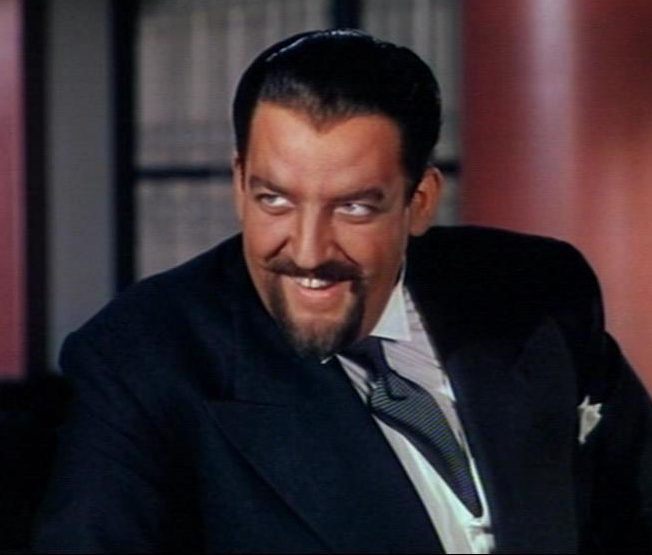
Michael: I don’t know what I’d rate this film, though. It’s hard because I want to give it a joke rating, but I liked it.
Jordan: [laughing] You’ve liked other films we’ve watched and haven’t given them complete joke ratings! Don’t think of it as joke ratings, think of it as topical ratings.
Michael: Fine.
Michael’s Rating: Ten “No, That Was Not Don Ameche, Rewind It….I Still Don’t See It”s
 Jordan & Michael Watch Movies!