The Silence of the Lambs
Directed by Jonathan Demme
“You still wake up sometimes, don’t you? You wake up in the dark and hear the screaming of the lambs.”
“Yes.”
“And you think if you save poor Catherine, you could make them stop, don’t you? You think if Catherine lives, you won’t wake up in the dark ever again to that awful screaming of the lambs.”
“I don’t know. I don’t know.”
Hannibal Lecter and Clarice Starling in The Silence of the Lambs
Not too long ago, I decided to watch the entirety of the television series Hannibal on Netflix. After I finished the third (and currently final) season, I decided to go back and watch the movie that started my love for the Thomas Harris Hannibal series in the first place: Jonathan Demme’s superb adaptation of The Silence of the Lambs. As it is part of the Criterion Collection, I asked Michael to watch it with me.
Michael: Good movie.
Jordan: It’s so good, even though we’ve both seen it multiple times, we still spent over forty minutes talking about it afterwards.
Michael: I even said, “Are we going to talk about this one? I’ve seen it so many times. What are we even going to have to talk about?”
Jordan: It’s an excellent movie to revisit. It’s one I always want to have on hand to rewatch.
Michael: It’s legitimately art.
We had a lot to say about this movie. This is a long one, folks, so hunker down and enjoy!
SPOILERS BELOW! Don’t shove a moth down my throat to shut me up, just watch the movie and come back afterwards if you don’t want plot points ruined!
Clarice Starling (Jodie Foster) is finishing up her final months of training at the FBI academy in Virginia when she is called to the office of Jack Crawford (Scott Glenn), a special agent in the Behavioral Science Unit. Crawford asks Starling to interview Dr. Hannibal Lecter (Anthony Hopkins), an inmate at Baltimore’s State Hospital for the Criminally Insane. Lecter was a psychiatrist who murdered multiple women and ate parts of their bodies, earning him the nickname “Hannibal the Cannibal”. Starling notices the amount of material regarding the “Buffalo Bill” case in Crawford’s office. The FBI is racing against the clock to make sure the notorious active serial killer doesn’t claim another victim.
Starling interviews Lecter from his high security enclosure the bowels of the institution. Lecter finds Clarice interesting and offers to help the FBI with the “Buffalo Bill” case by constructing a profile that will help them capture the killer. In return he wants to be moved to a more…comfortable institution. Starling realizes Lecter knows who “Buffalo Bill” is, and the FBI will need Lecter’s cooperation to catch him.
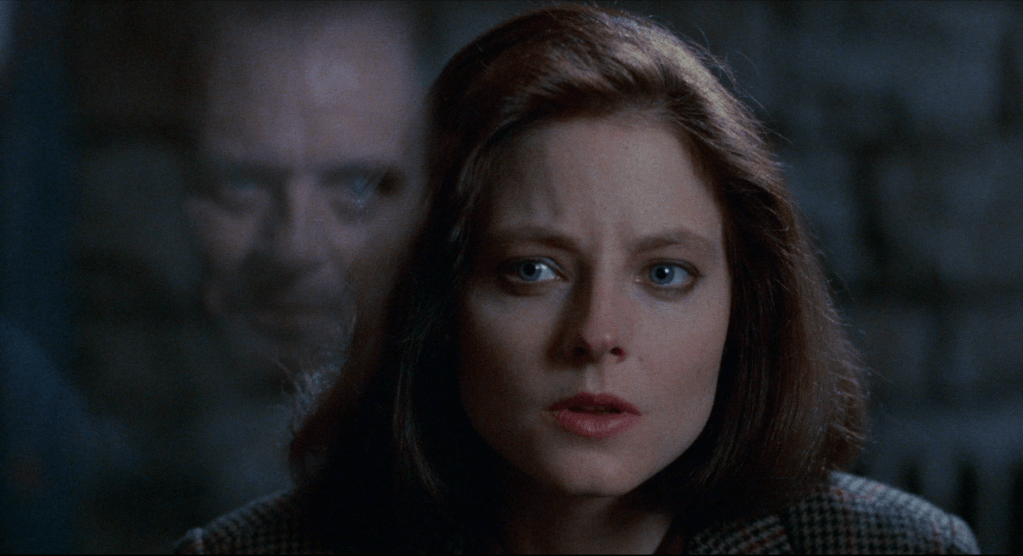
Crawford officially brings Starling on the “Buffalo Bill” case due to the rapport she has established with Lecter. Starling brings the case dossier to Lecter, but he says he will only help with the case if Starling shares information with him: for each question she answers about her life, he will answer one of her questions about the case. Starling clearly does not want this psychopath to have access to her deepest thoughts, but she sees no other way to obtain the information the FBI needs from him.
Meanwhile Jame Gumb (Ted Levine), the “Buffalo Bill” killer, is in the process of selecting his next victim. He abducts the slightly overweight Catherine (Brooke Smith) who turns out to the the daughter of Senator Ruth Martin (Diane Baker). Gumb keeps Catherine in a dried up well in his basement, slowly starving her and forcing her to lotion her skin frequently. He plans to kill her and use her skin as material for a “woman suit” he will use to complete his “transformation”.
Back at the Baltimore institute, head psychiatrist Dr. Frederick Chilton (Anthony Heald) has been monitoring Starling’s conversations with Lecter and decides to beat the FBI to the punch by contacting Senator Martin and arranging his own deal with her to transfer Lecter to D.C. to help catch “Buffalo Bill”. Chilton is clearly after boosting his own notoriety by using the case as a basis for a book. Starling travels to D.C. and sneaks into the building where they are holding Lecter in an oversized cage. After a harrowing conversation, cut short by the local authorities realizing she shouldn’t be in the room with Lecter, Starling retrieves her original dossier from Lecter who tells her it contains all the information she needs to solve the case.
Later that night, Lecter murders his guards, escapes from his confines, and disappears. Starling knows he won’t come after her and decides to focus her attention on the dossier. Lecter had told her that “Buffalo Bill” coveted something he saw every day. This leads her to visit the home of the first victim to interview the family and find out the connection she had to the killer. In the process, she comes upon Jame Gumb and finds Catherine in his basement. After a tense confrontation, she shoots Gumb.
Clarice Starling receives a phone call during her FBI graduation ceremony reception. Hannibal Lecter is on the other end of the line. He bids her farewell, saying he’s going to have an old friend for dinner. It’s revealed that Lecter is in the Bahamas, watching Dr. Chilton descend from a plane and make his way through the crowds. Lecter follows him as the credits roll.
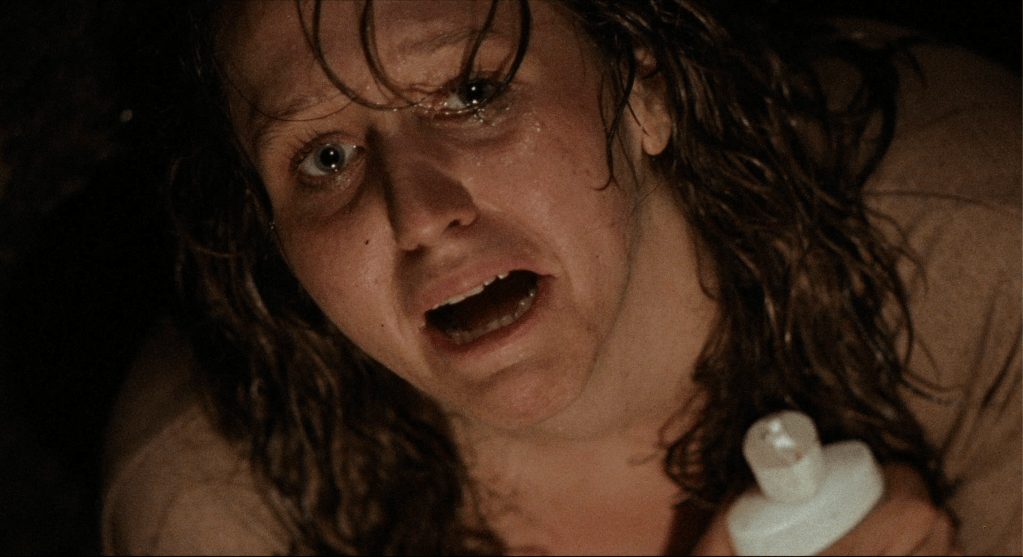
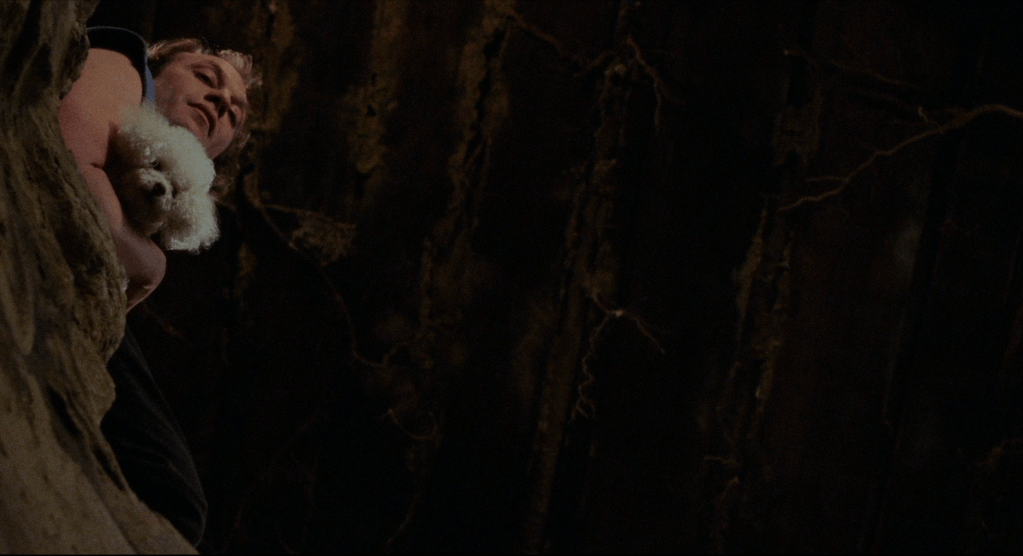
A terrified Catherine (Brooke Smith) tries to refuse the application of lotion while her captor, Jame Gumb (Ted Levine), threatens her from above.
For those who have been living under rocks (or maybe weren’t born yet) the film garnered widespread critical praise and won many awards, including the 1992 Academy Awards for Best Picture, Best Actress and Actor, Best Director, and Best Adapted Screenplay.
Michael: I don’t think I noticed until this viewing is that Hannibal is just a supporting character. He is not in this movie a lot at all. Clarice sees him…what?…four times?
Jordan: He has very little screen time.
Michael: But it is so well done and such a memorable performance that you think he’s the star of this movie.
Jordan: And he won the Academy Award for Best Actor for this film.
Michael: He won Best Actor? Not Best Supporting Actor?
Jordan: Yup. He won Best Actor for this film.
Michael: Well, okay then!
What’s even more impressive about the slew of awards the film won is that it was released in February of 1991. Historically, most films that are nominated and win the major Academy Awards are released during the Thanksgiving/Christmas/New Year’s time period just prior to the award ceremony taking place in early spring (commonly referred to as “award season”) to keep the films fresh in the minds of voters. It really speaks to the power of the film that it was able to leave such a lasting impression in viewers’ minds for over a full year before it won its five Academy Awards in March 1992.

Photo from the Academy Awards website.
Jordan: It’s always fascinating to me how many times The Silence of the Lambs is classified as a horror film and how many times Anthony Hopkins’s portrayal of Hannibal Lecter is rated as one of the best horror villains ever. I remember a lot of my friends saw the movie in theaters when it was first released and how many of them talked about how scary and terrifying it was. When I saw it for the first time I thought, “This isn’t a horror movie. This is a crime procedural with horrific elements.” But because Hopkins’s performance is so strong, it’s a horror film. And because Ted Levine’s performance is also so strong, these two serial killers and Clarice’s fear in the movie combine to make audiences think this is a horror movie…
Michael: Because they are scared.
Jordan: Yes.
Michael: I think a lot of times crazy people are portrayed as just weird and off kilter like, “Whooooooo!!!!” But this movie makes them seem so genuine. These are people who genuinely might exist, who you can see yourself running into on the street, and you might not even notice them.
Jordan: That’s another part of the brilliance of this movie. Because you hear about real life serial killers and how they have neighbors or friends, or they even might be married…
Michael: And have kids!
Jordan: Right! You hear these stories and think, “How did these people not know?” This movie shows you how people don’t know. It’s why I think Jonathan Demme was the perfect director for this film. So many of his films are about people who aren’t the usual Hollywood style “perfect American”. He’s interested in the reality of average people and the things that happen to them. Like in Something Wild he makes sure to show in every establishing shot a person who inhabits the small town the main characters drive through. He brings that sensibility to this movie. Even though there are some big name cities where some of the action takes place, the camera is always more interested in the small towns in Virginia, Ohio, Tennessee, etcetera. Demme’s so attenuated to the elements of everyday life. When Clarice goes to [the first victim] Frederika’s house and the establishing shots are of this very small town, it gives the audience the sense that these are everyday areas that they may know and be familiar with, very normal and bland. Pretty soon Clarice is in a basement where there’s a well holding a woman who is about to be killed and skinned to be material for a woman suit as part of Jame Gumb’s transformation.
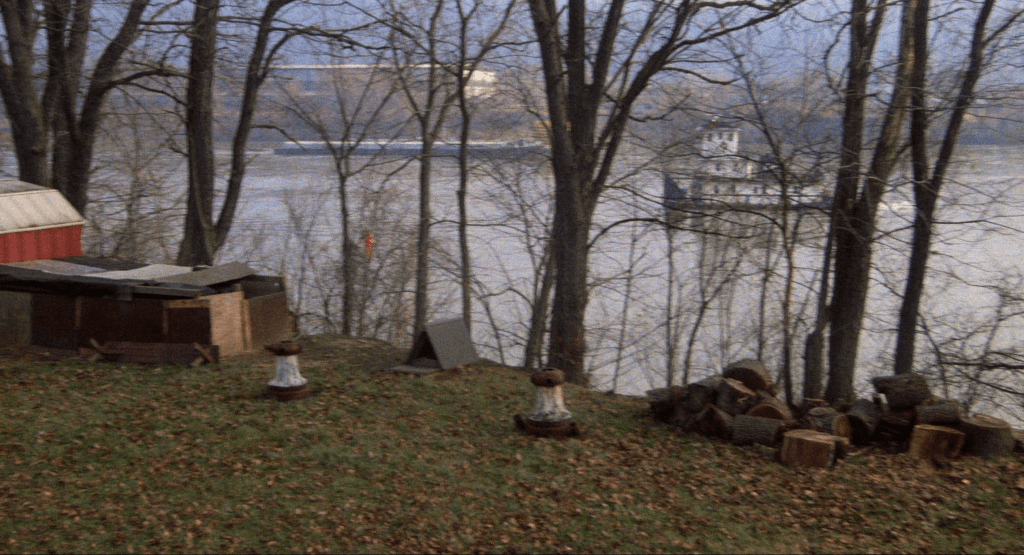
The scene begins with a long pan… 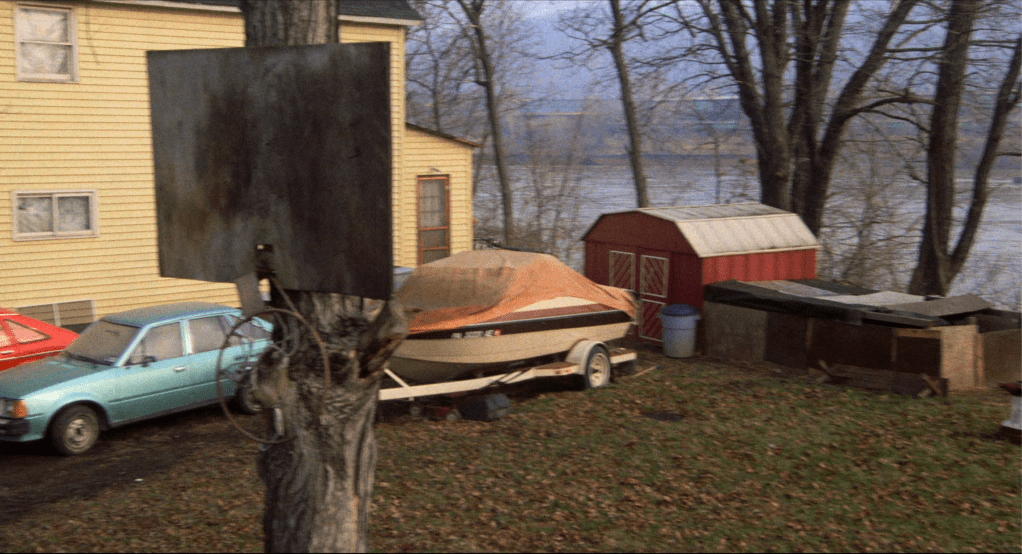
…which moves around a house… 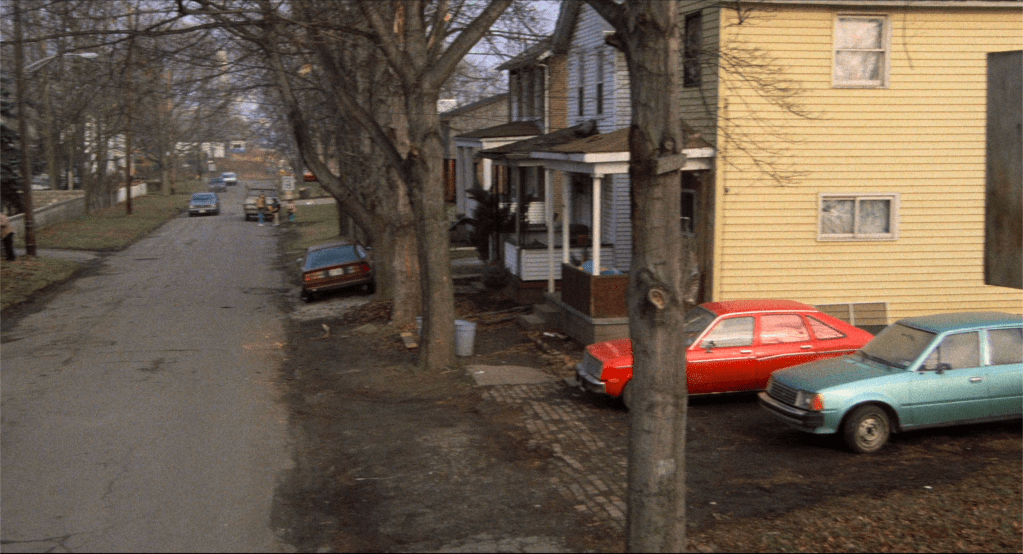
…to show all of Frederika’s home street… 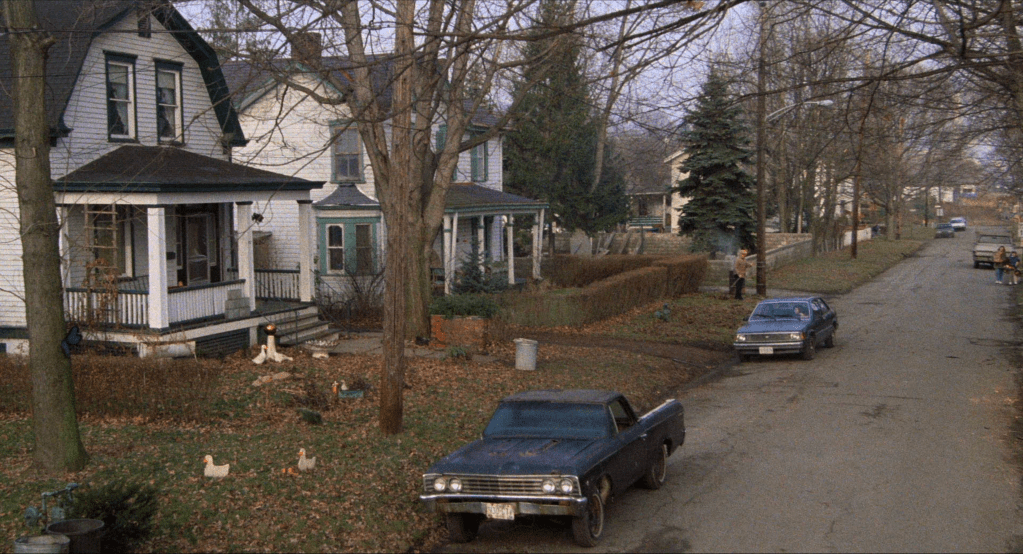
…and finish on her house. 
The everyday aspects of life are shown, like a train passing by… 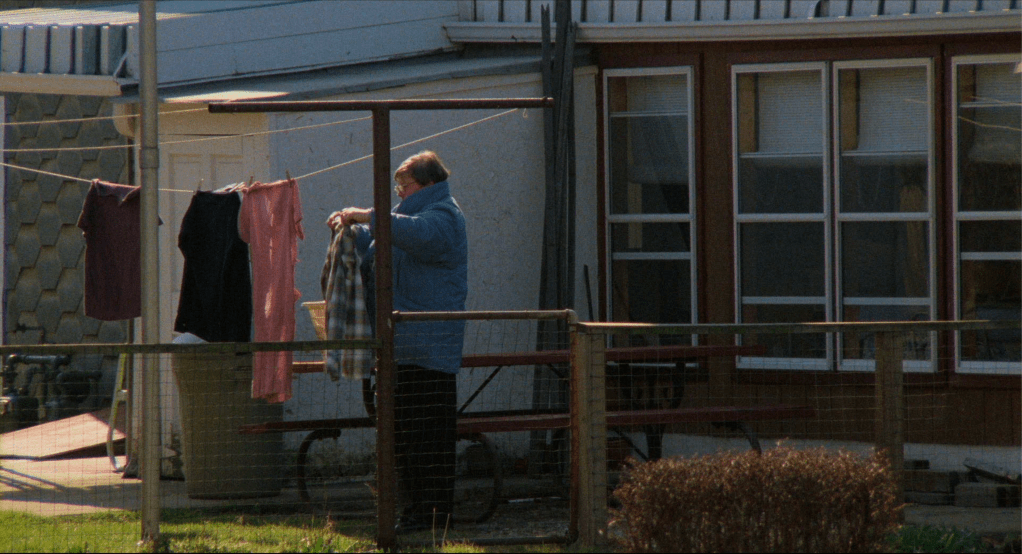
…a neighbor doing laundry… 
…a bird house… 
…a lawn ornament… 
…and a neighbor hanging out in her window. 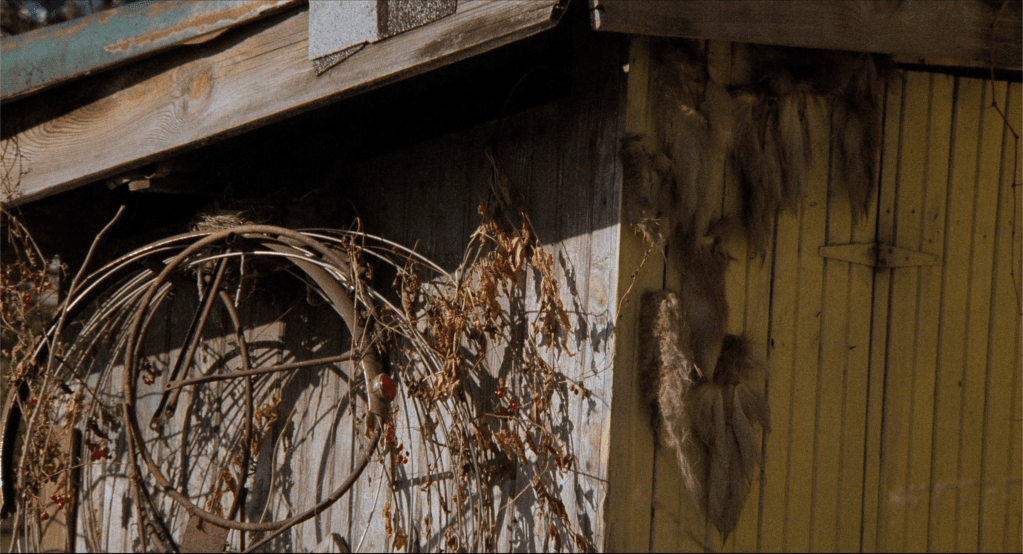
Clarice spots animal skins on an outer wall just before she approaches Frederika’s father.
Jordan: How many times have you seen this movie?
Michael: I don’t know…I would say…seven or eight times maybe? It’s a good movie.
Jordan: But this is the first time you noticed the Nazi pattern on Jame Gumb’s quilt.

Michael: I just never looked. To be fair, there are only two swastika references: his quilt and something hanging on the wall. There are so many nuanced layers in good art, it just depends on who you are as a person which determines what you’re looking at.
Jordan: And especially this movie, which has a lot of nuance that you may not catch the first or even the second time you see it. The first time I saw it was when I was in high school. I remember thinking my favorite scene was after Hannibal Lecter has been moved to the large cage in D.C. and Clarice sneaks in to interview him for the last time. That interview was my favorite scene in the movie, but I couldn’t tell you why at the time. The scene that follows is the one with the SWAT team and the murders of the guards and high drama; most people really remember that scene from the movie. The second time I saw the movie, I didn’t remember those details at all or the scene going on so long. Chris Isaak plays one of the SWAT team members, and I hadn’t even noticed! I remembered the guard strung up with his innards hanging out, yet I didn’t remember any of the other details. But I remembered the scene between Lecter and Clarice so vividly. I thought to myself, “Why do I remember that scene so clearly?”
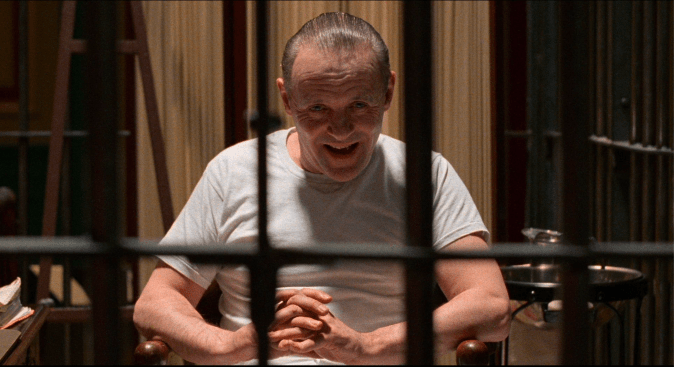
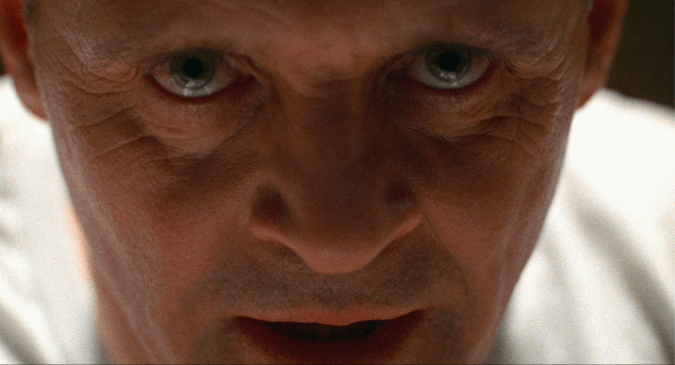
So every time I watch this movie, I pay attention to how the scene is constructed and their performances. It’s so excellently done, but it’s also all subtlety. Like the camerawork. It starts with point of view shots of the two of them seeing each other through the bars of the cage. As the scene goes on, the bars slowly disappear from the shots. The person who is first shown without bars obscuring their face is Lecter. And he’s the one who’s more free than her in this scene. The film has a lot of direct camera address, where the characters are facing straight into the camera. Most of the time it’s to indicate a particular character’s point of view, so the audience can see what they are seeing. But most of the time people’s eyes are looking at something just to the right or left of the camera and aren’t looking directly into it. There are very few moments where someone actually stares right into the camera lens. Lecter does it the whole time. Straight into the camera, no blinking. And in that final interview scene, Clarice slowly starts to look directly into the camera. It’s brilliant! The moment that she finally faces the camera, full on, eyes right into the camera lens, the bars have disappeared from around her face in the shot. It’s so smart, but it’s so small. Audiences are used to seeing talking heads giving monologues in movies. The audience isn’t going to consciously think, “Oh, they’re doing something else here with her performance and the camera.” The audience just takes it at face value as another talking head monologue. Being able to consciously notice these shot constructions is why this movie is so fun to revisit. You can then notice all the moments the people are directly addressing the camera and think about why they are doing it at that moment and where they are actually looking, if it’s into the camera’s “eye” so to speak or somewhere else.
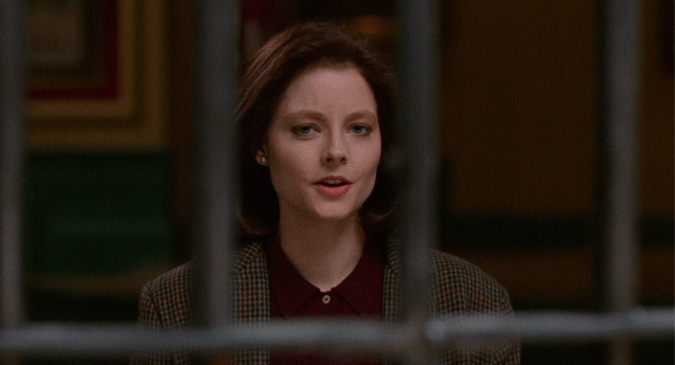


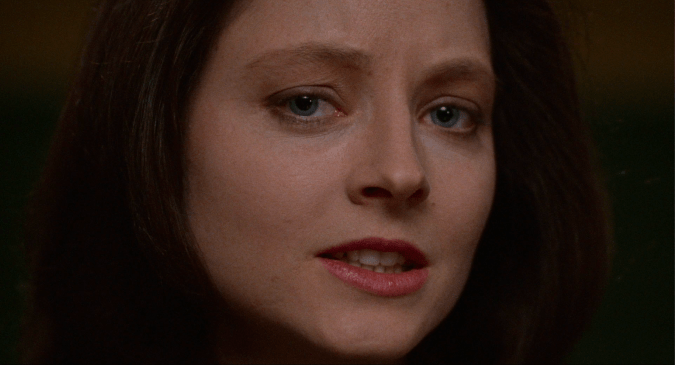
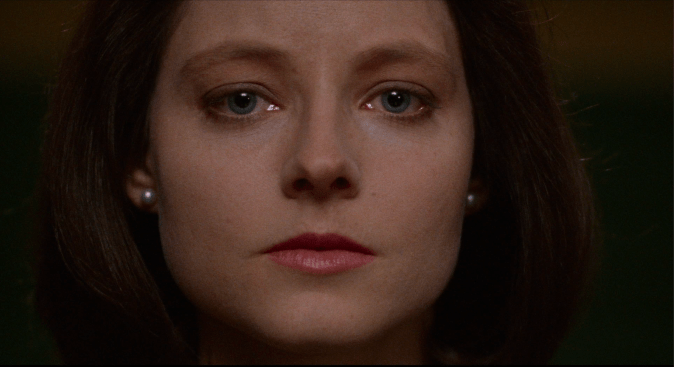
Michael: I think that scene is so brilliantly acted for two reasons. It could very easily have been overdone, where actors do the “most” acting instead of the best acting. But Jodie Foster is so excellent. I was watching her decide how much Clarice is going to tell Lecter, and slowly come to the realization that she can’t let this killer be her therapist, but he’s pulling this out of her, and she has no choice. You pull the plug, the water has to go down the drain. But you can see her struggle with trying not to give him too much information, you can see her thinking…
Jordan: Yes, like when her eyes keep darting away as opposed to when she’s looking at him.
Michael: She has this moment where she takes a breath, and in that breath is a thousand moments. It’s brilliant.
Jordan: And it’s great because not only is she trying to keep back this information from Lecter, she’s trying to keep this memory from herself. She’s reliving this trauma, which lays her bare in front of this terrifying man.
Michael: The other reason it’s a brilliantly acted scene is because I think it was the third time I saw this movie before I realized that memory isn’t shown onscreen. I had vivid memories of seeing her see the lambs, and her grabbing the lamb, and running away. But you don’t! It’s just her telling the story! And she does it so vividly it gave me memories of something that didn’t exist on film!
Jordan: Yes! She tells the story and you can picture it. It’s due to the combination of the writing and her performance. That same dialogue could have been delivered by an equally talented but less skilled actor, and you wouldn’t have seen it the same way. Jodie Foster is able to take those words and deliver them evocatively.
Michael: And she takes all those breaths because she is reliving this memory. Those breaths give the audience the time to paint the picture. It’s something that is often missed in monologue; actors don’t always give the audience enough time to paint the picture.
Jordan: Or they choose the wrong moments to give space.
Michael: This is a mark of good storytelling.
Jordan: And the best thing about Foster telling this story as Clarice is she doesn’t do what so many other actors do when they deliver monologues of this emotional intensity, which is letting their boogers run out of their noses or flutter their eyes as if they’re holding back tears. There are so many acting tricks that actors use when giving monologues, and she’s not using those tricks. She’s using intelligent acting. I bet she sat down and studied that script and marked it all up, where she was going to take a breath and such, but she’s able to then take all that work and deliver the words naturally and believably. She’s not relying on “Look at my ACTING!” to do it. And the same goes for Anthony Hopkins as Hannibal Lecter. He inhabits the character in this movie SO WELL.
Michael: And now having watched back-to-back two other people playing that character [Brian Cox in Manhunter and Mads Mikkelsen in the TV series Hannibal, both culled from the novel Red Dragon by Thomas Harris], they just can’t hold a candle to this performance. The other actors do a great job with the character, but nobody else gives you simultaneously the feeling that Lecter is a BRILLIANT man who is ABSOLUTELY bat-shit terrifying.
Jordan: You believe Lecter is dangerous the second you see him for the first time.
Michael: The SECOND you see him!
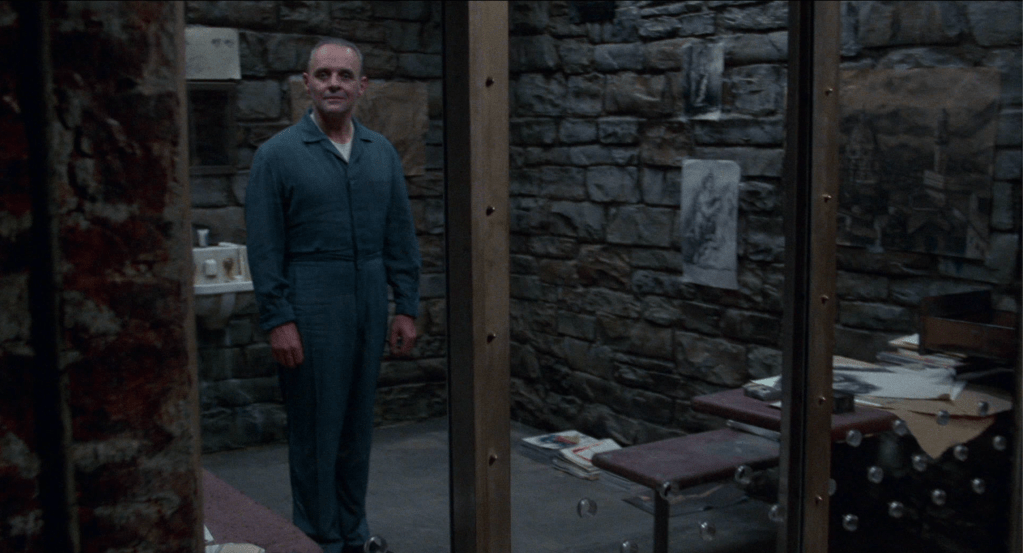
Jordan: The camera pans down the hallway, and he’s just standing there. He’s waiting for the camera to see him. It’s a terrifying moment. He just has that little smile on his face, and he’s waiting.
Michael: I wish we had more people who saw the value of actresses that have the same visual qualities as Jodie Foster. She’s good looking in that she’s someone you could have realistically met in your everyday life. She’s not strikingly beautiful. And you see in this movie she is constantly being checked out. Literally, every single man, every throwaway extra they could get, even to the point that the guy in the airport who cuts in front of her and is like, “Get out of my way” looks back to check her out. And it’s all done in this completely believable way. I realize you want actors to be attractive because, literally, a huge part of the job is to just be looked at by lots of people. But I think we let men be average looking, but women all have to be pin-ups.
Jordan: If they’re leading ladies or stars, yes. Unless the movie is about how average looking or ugly or fat the woman is…
Michael: Yes, unless there’s some specific plot element that says they have to be anything but impossibly beautiful. I just think it’s nice to see Jodie Foster is an incredible actress who is good looking but not unbelievable.
Jordan: This film really drives home the sexist world that she’s inhabiting…
Michael: Oh, absolutely!
Jordan: …especially in law enforcement.
Michael: From every angle.
Jordan: They do address it directly once when she talks to Crawford about how he belittled her in front of a local West Virginian police force, and he replies it’s just a smoke show, she shouldn’t be bothered. She tells him they look to him on how to behave. Her saying that is just a small drop of the sexism you see in the movie. Every place she goes she gets hit on. It doesn’t matter the context. She gets hit on by Dr. Chilton before she talks to Lecter, Miggs in the cell next to Lecter throws his semen on her, the entomologists even hit on her! In that situation, she’s a woman in authority who has come to them as experts to consult on this murder case, and they’re still hitting on her! The audience watches her deal with all these men, and how she has to be ingratiating to them through the whole film. Even the moment where she tells the police officers there are too many people in the examining room and they have to leave, she doesn’t do what her male boss would do, which would be, “We need to clear this room!” She has to tell them how thankful they are for their help, how much the family of the dead woman would thank them, but can they please just get on with their job…
Michael: She has to shoo them off like she’s someone’s grandma.
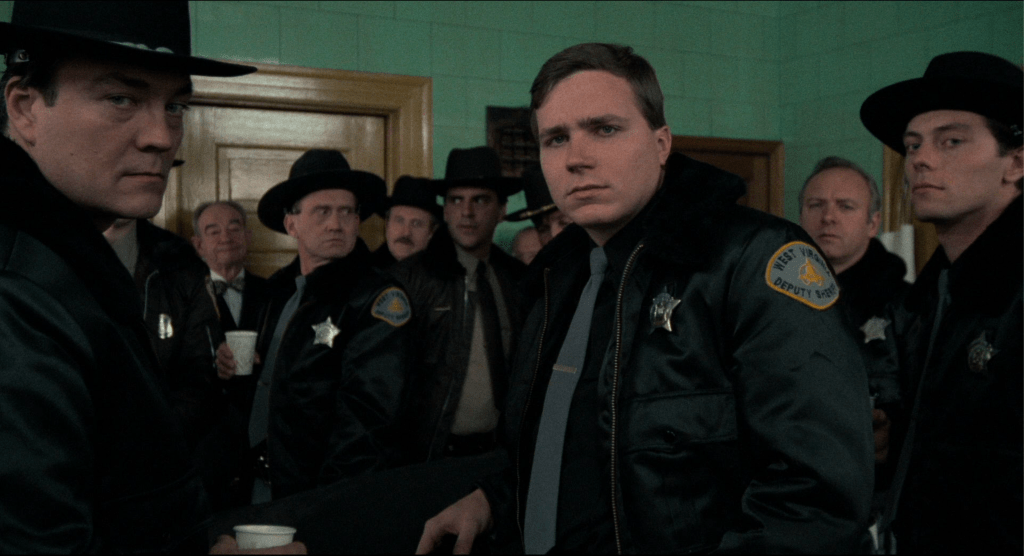
Jordan: And they all look at her resentfully! It’s throughout the entire movie. Again, this movie is so well layered. They have a couple moments where this is very clearly part of the scene, but then we also have all those smaller moments, where she’s running on the training course and the guys look at her as she passes them.
Michael: It’s a really nice almost feminist movie. It opens with her running this obstacle course, and she’s doing all these physical things, and she’s sweaty and gross.
Jordan: And all her make-up in the movie is very simple, plain, and straightforward.
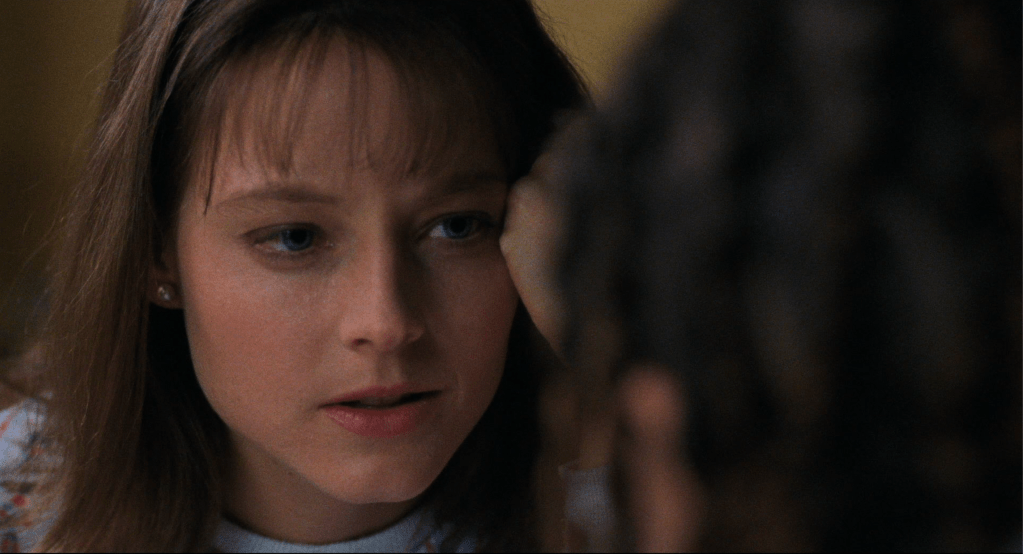
Michael: Jame Gumb wears more make-up than she does! It’s a very realistic portrayal of how she’s not only getting checked out all the time but also being actively hit on and even through she’s completely disinterested, she has to take it all with a good face so she can do her job. “I’m more concerned with this, you know, serial killer I’m trying to catch before he murders this girl he’s captured, and we’re running out of time, but thanks for the offer of the drink.” And I appreciate the entomologist who hits on her, because he straight up is like, “I’m a little cross-eyed nerd who’s going to ask this pretty girl out, because I have nothing to lose.”
Jordan: And you can tell in that scene she’s more amused than annoyed. It’s different than when Dr. Chilton hits on her in that roundabout way and she’s just like, “Goddamit, leave me the fuck alone.” Her reactions to how these men view her through the movie are very interesting to watch.
Michael: They’re appropriate to the level of interaction that she gets from them. Chilton and the way he was talking to her was highly inappropriate.
Jordan: He was very belittling.
Michael: He goes through this movie like his shit doesn’t stink, and in the end he gets eaten. Which again! I thought that was a thing we saw! I thought there was a scene where we at least see him realize Lecter is free and in the Bahamas with him. We don’t.
Jordan: I love that moment of hubris. Lecter wouldn’t have been free if Chilton hadn’t moved him by calling the Senator to get his own deal for publicity and the press. If he had just let the FBI conduct their investigation, Lector would still be in that basement cell. But now he’s free.
Michael: I think it’s really important that they included the dialogue where Clarice says, “Violence isn’t common with transsexuals.” And Lecter replies, “He’s not really a transsexual.” Movies loooooooove the “trans killer”. Because it’s an easily graspable visual way for cis gender people to say, “This person isn’t right in the head.” It’s the easiest way for cis gendered audience members to say, “Look how CRAZY they are, they think they’re a woman, and that craziness drives them to kill!”
Jordan: And that’s what the trope almost always is, men killers dressing in women’s clothing…
Michael: It’s almost never the other way around!
Jordan: It’s almost exclusively these characters that are then labelled in the movies as transsexual or transvestites.
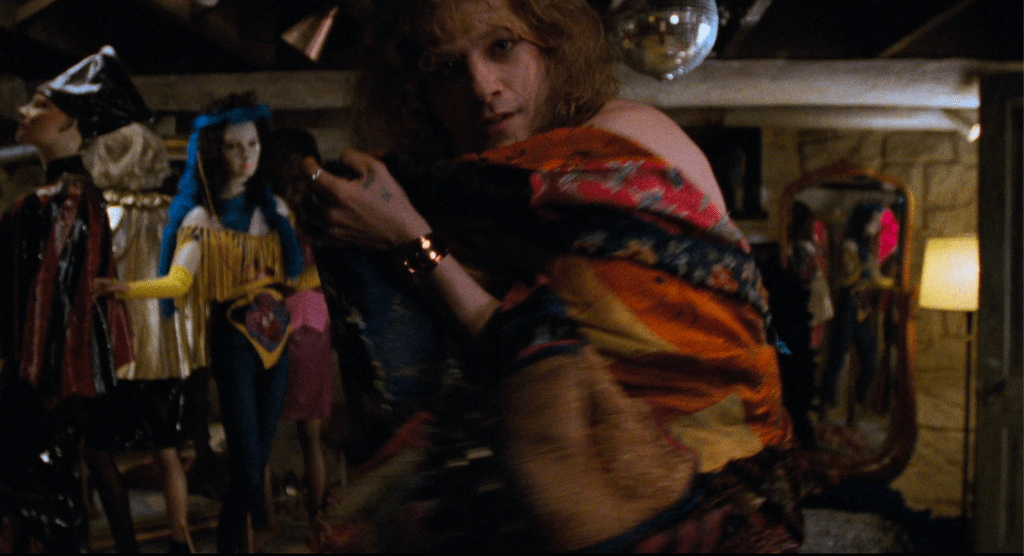
Michael: “I’ve had friends tell me they didn’t notice that isn’t a wig, that’s pure some woman’s scalp.”
Michael: And it’s important to note that this movie blatantly says that Jame Gumb is not a transsexual. Because then the movie gets to keep the “Look at this crazy trans person!” while claiming to not be offensive.
Jordan: People were offended by the movie. It was picketed and protested for this very reason. Which is why Jonathan Demme’s next film was Philadelphia, as a way to say they weren’t trying to attack the gay community. (Even though being a gay man and being transsexual is not the same thing.) But I do think it is important that Silence of the Lambs has the moment where Clarice and Lecter state very clearly that this behavior is not normal behavior for transsexuals, and Lecter clearly states that Jame Gumb is not a transsexual, he’s something else.
Michael and I will discuss in more depth Hollywood’s obsession with the “trans killer” (a phrase we’ve used to reflect the impression these plot devices leave on audience members and to denote the offensive nature of the trope) at a later date. After all, there are plenty of these movies in existence, and at least one other of them are in the Criterion Collection…
Michael: They talk about how Lecter is a brilliant therapist, and how he’s this incredible serial killer who is so very dangerous, but they never talk about what an incredible lighting designer he is. Because the police barge in, and Miss Thing is just hung by the chimney with care and is backlit in all kinds of ways…
Jordan: And there’s that one spot light moving…
Michael: And it’s like, “He had the time to kill these mother fuckers, eat a pork chop, take somebody’s face off, string somebody up by their guts, hang some lighting fixtures, put on the new face, change clothes, dump a guy in the elevator…” That’s the only part of the movie where I go, “…Really?”
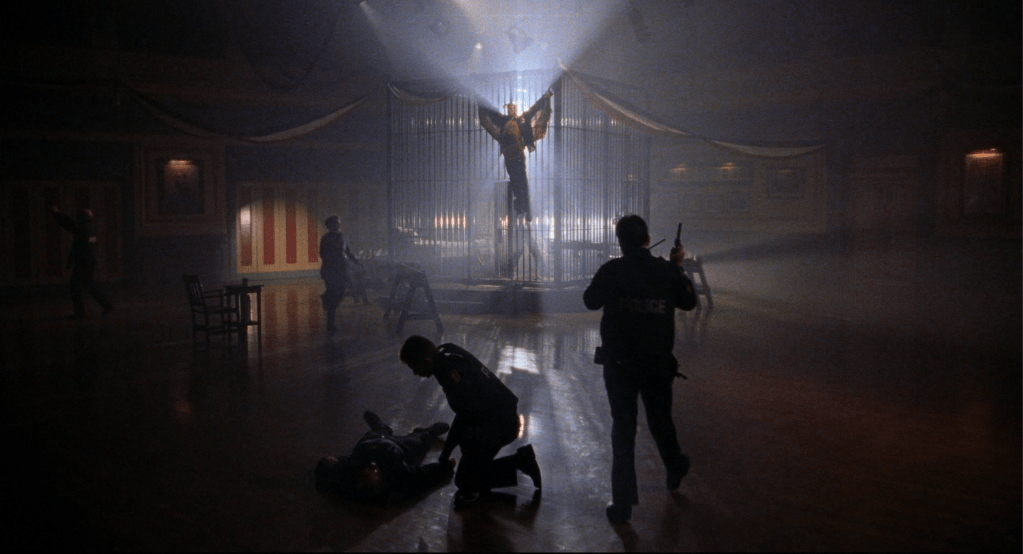
Jordan: Well, the lights are like that because if the room wasn’t dim, the officers would see it’s Lecter with the guard’s face on him. That’s one thing I really enjoy about that scene. It’s Anthony Hopkins on that floor, you can tell it’s Lecter lying on the ground there. But it’s believable that everyone comes in, the lighting is dim, they see the horror of the guard hanging in the room, they see the other guy on the ground with the clothing and the badge and what looks like his face and hair mauled after being attacked. It’s a theatrical sight that is so shocking to the characters that they don’t look too closely at the prostrated guard’s face.
Michael: And it’s so shocking to the audience that we aren’t looking too closely at the guy’s face.
Jordan: There is a working suspension of disbelief that is better than other movies with doubles where they have the actor who plays the guard be the body until we get into the ambulance and then suddenly it’s Hopkins.
Michael: And this time I’m watching the movie, I’m thinking, “Oh, that body on the floor is clearly Anthony Hopkins. How did everyone miss this?”
Jordan: But that’s what makes it brilliantly done and makes it believable to the audience. Because Hannibal is so intelligent, he realizes he needs to create the proper atmosphere to get away with this plan. Which is also why when the EMTs begin treatment and get close to his face he fakes the seizures so they’ll get him out of the building. The only thing in this movie that gives me pause is how did Hannibal get Chilton’s pen that he uses to get out of his handcuffs? That’s the only thing that doesn’t track for me.
Michael: Because he was pretty tied up when Chilton had the pen in his cell.
Jordan: Yes. And Chilton gets up and walks around the cell, but Hannibal can’t sneak it away. The only thing I could think of is that Chilton just left the pen on the bed, which just seems out of character.
If you haven’t seen The Silence of the Lambs (and we haven’t completely ruined the experience for you by talking about all its minutiae), it is a must see movie that impacts generation after generation now that it’s entered pop culture.
Michael: This is one of those movies that’s so important for pop culture that it’s just constantly ripped off. There are the things that everyone does like the “Fava beans” and the sucking teeth moment. But there are also so many other lines, little moments, and nuanced performance elements that are referenced in many other pop culture movies, television shows, and other artwork. This movie is art that has spawned so much more.
Jordan: And it’s fascinating to watch other things that reference it or have spun off of it or imitate it, then go back and watch this movie and realize how great it is. Even when other movies are influenced by this one and are trying to seriously imitate it, not just parody it. This movie just gets it right, the direction, the performances, the script, the production…
Michael: That’s a sign of incredible art. That it’s so good that people say, “I want to do it. The only way I’m going to get to do that is if I try to put it in my own thing.” This movie just makes strong, powerful, and correct choices. They always say imitation is the greatest form of flattery…
Criterion’s edition of the film looks fantastic, and they include hours upon hours of insightful special features. Needless to say, Michael and I will certainly be watching this movie again at some point in the future.
Michael’s Rating: Four and a half small towns with houses that have giant, sprawling basements.
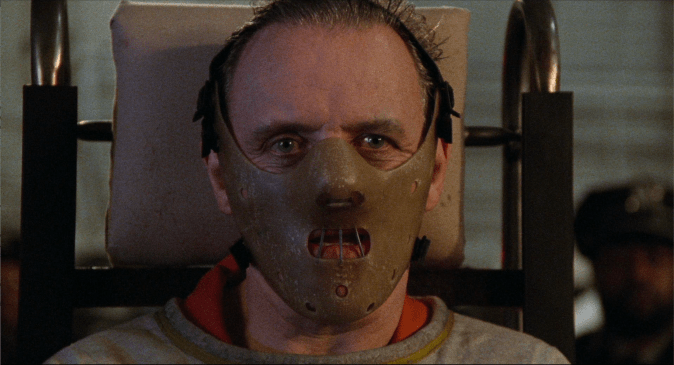
 Jordan & Michael Watch Movies!